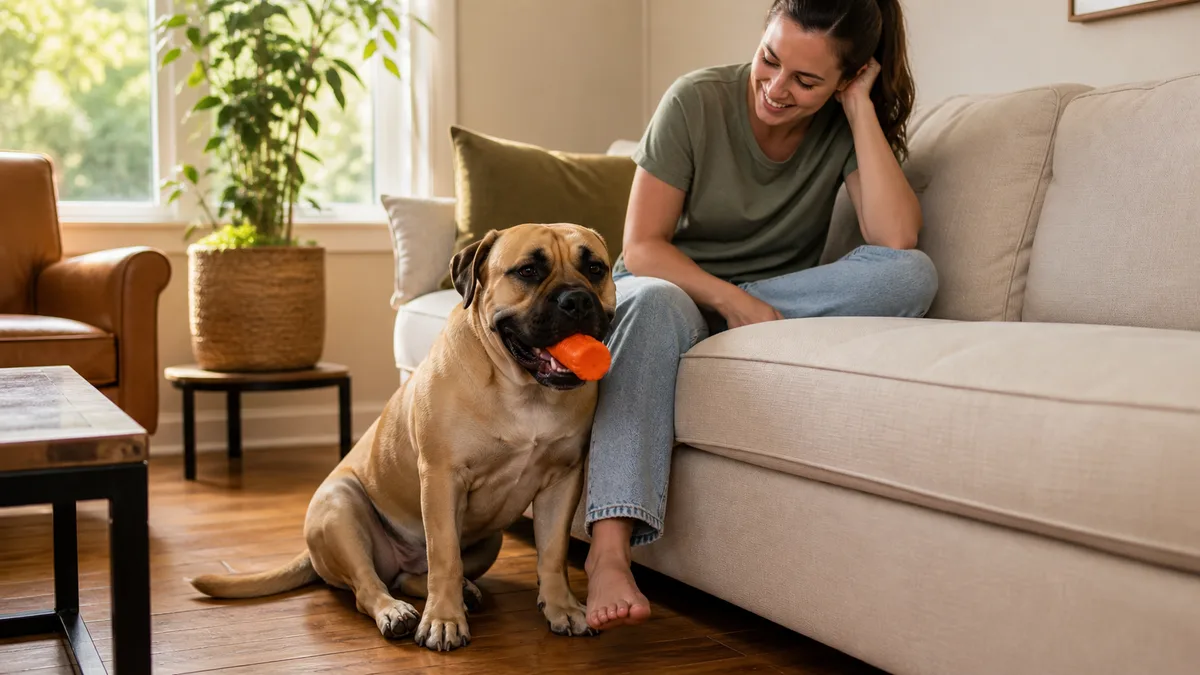
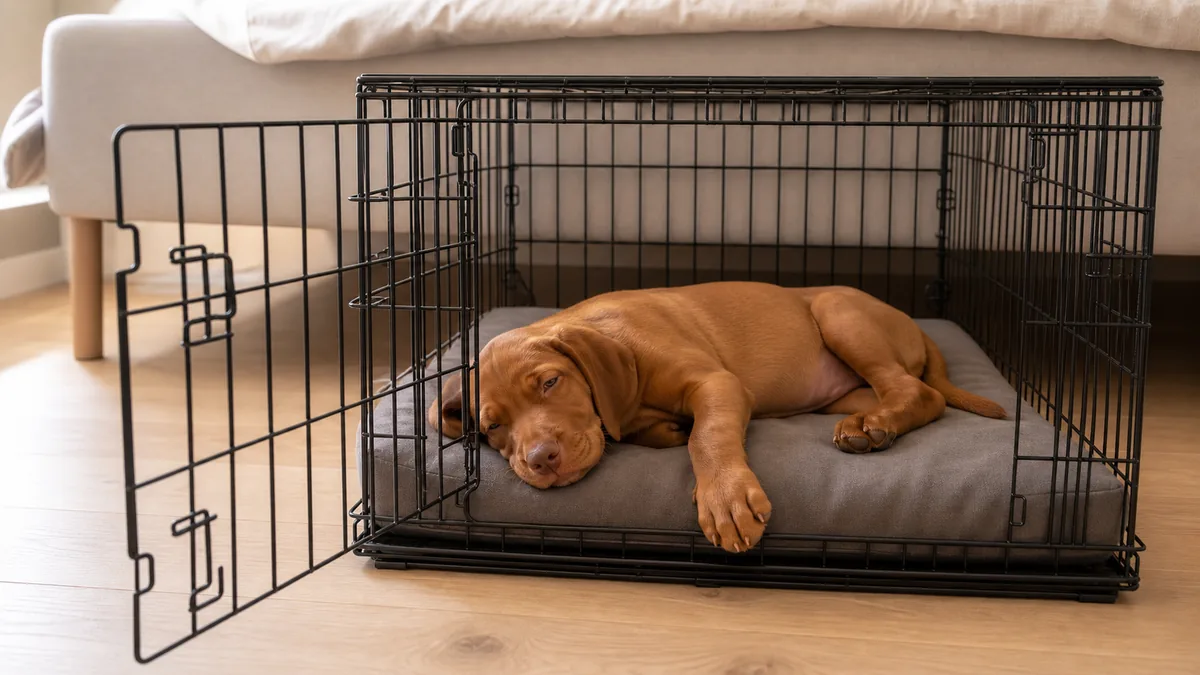
A puppy’s first seven days are not a training window. They are a decompression window. Her job for one week is to learn that this new place is safe.
This is the plan I wish I had with my first puppy: a pre-pickup checklist, the first car ride, hour one through four at home, night one with the crate by your bed, day-one nap cycles, and the seventy-two-hour vet visit.
My first puppy spent night one alone in the kitchen and cried for eight hours. My second and third slept in a crate beside my bed, settled by night four, and trusted me by day seven.
The first seven days at home decide the next fourteen months of trust. The goal this week is not training. It is letting your puppy feel safe enough to settle. This is the honest, hour-by-hour version of how to do that without burning her nervous system on day one.
- 1Why the first 7 days set the tone
- 2The 24-hour pre-pickup checklist
- 3The first car ride home
- 4Hour 1-4 at home, step by step
- 5Night 1: crate beside your bed
- 6Day 1 full schedule, hour by hour
- 7The three-tier calm protocol
- 8Feeding week one, slow transition
- 9Introducing the crate, no force
- 10Vet visit within 72 hours
- 11Stress signals: normal vs vet-call
- 12The name and 3 basic cues
- 13End of week 1: day-7 milestones
Why the First 7 Days Set the Tone (Decompression and the Bonding Window)

Leaving the litter is the single largest stress event of a dog’s life. An eight-week-old has never slept without warm bodies pressed against her, never smelled an unfamiliar house, never been alone in a quiet room. Week one rides on top of that biology.
The same eight-to-sixteen-week stretch that everyone calls the socialization window is also a raw acute decompression window for the first seven days inside it. The bonding work happens because of how safe she feels, not because of how many cues she learns.
What gets coded in week one
Every encounter in these seven days lands harder than it will at six months. A calm first night codes as “my human did not abandon me.” A first night alone in the kitchen codes as “no one came.” Both write to the same neural circuit that drives separation behavior for the next fourteen months.
That is why this article spends thirteen sections on “do less” rather than “train fast.” A puppy who feels safe at day seven is two months ahead of a puppy who feels frantic.
- The eight-to-sixteen-week window is socialization plus acute decompression stacked. Week one is the decompression half.
- Every week-one encounter writes harder than the same encounter at six months. It is a trust-account, not a training-window.
- Get week one right and most of year-one behavior never appears. Get it wrong and you spend six months unwinding it.
Before You Pick Them Up: The 24-Hour Setup Checklist
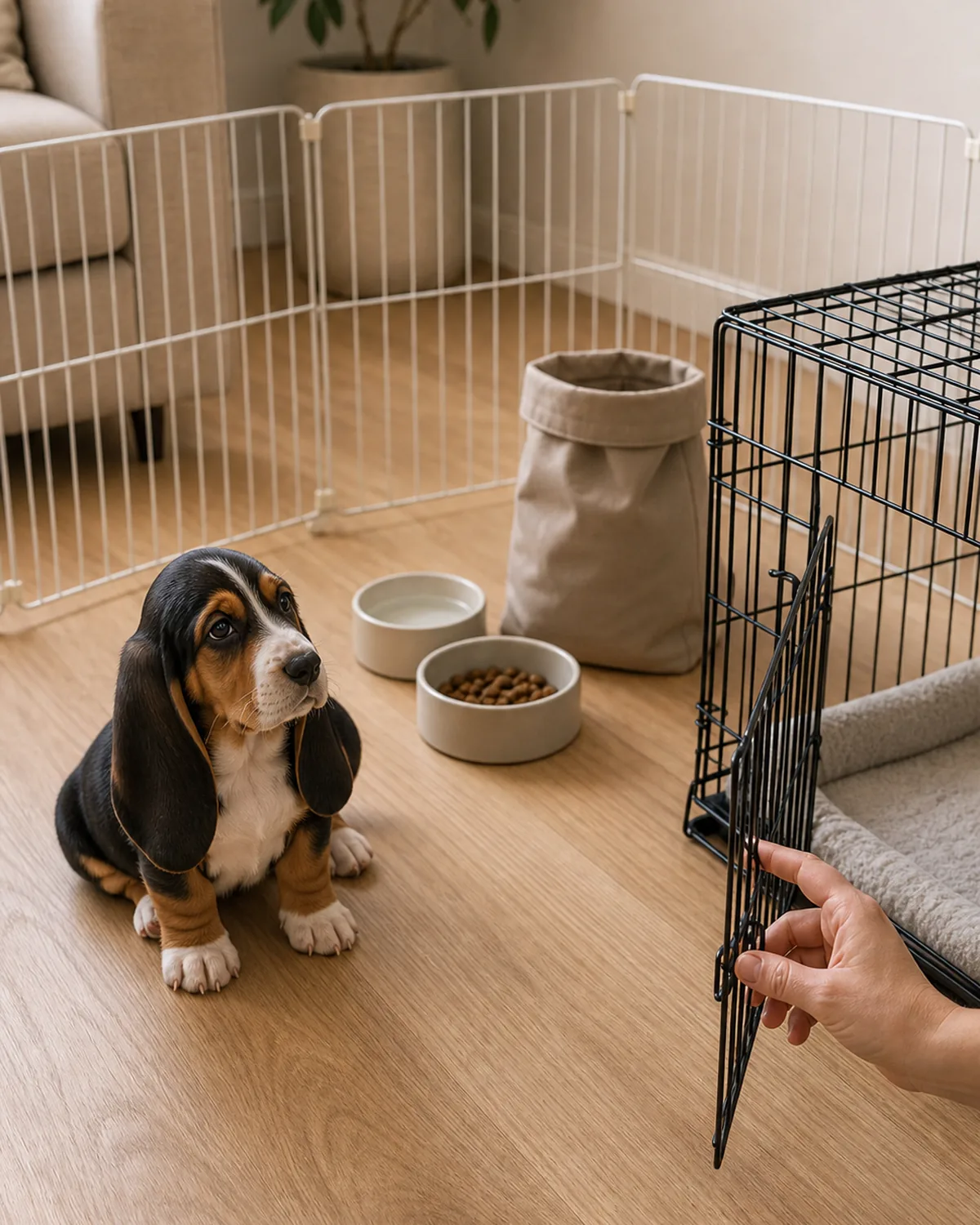
The single biggest favor you can do future-you is to finish the entire setup the day before pickup. A puppy who walks into a finished house meets a calm human. A puppy who walks in while you are still assembling the crate meets a flustered one, and she downloads which version of you she will live with.
The pre-pickup list is short and non-negotiable. Run a full proofing pass first, because nothing else matters if the cords are still loose and the toxic plants are still on a low shelf.
The room-by-room hazard map and the supervise-versus-confine plan live in our guide on how to puppy-proof your home, and that pass comes before anything below.
Seven items, finished the night before
Crate sized for adult weight goes in the primary bedroom beside the bed. An X-pen marks the daytime yes-zone in the living room. Food and water bowls go on a wipeable floor. Two bottles of enzyme cleaner for accidents, never bleach.
One full week of the exact food the breeder or rescue has been feeding goes on the shelf, because gut changes plus environment changes at the same time means soft stool every time.
An ID tag is engraved and on the collar before you drive over. The vet visit is booked for inside seventy-two hours of arrival. The poison hotlines and the nearest twenty-four-hour emergency vet are written on an index card under a magnet on the fridge.
- Finish the entire setup the night before. A flustered first hour codes as “this house is chaotic.”
- Keep the breeder or rescue food for a full week before any transition. Soft stool from changing food on day one is preventable.
- Three numbers on the fridge before you drive: your day vet, the nearest twenty-four-hour ER, and ASPCA Animal Poison Control at (888) 426-4435.
The First Car Ride Home: Quiet, Towel-Lined, No Errands
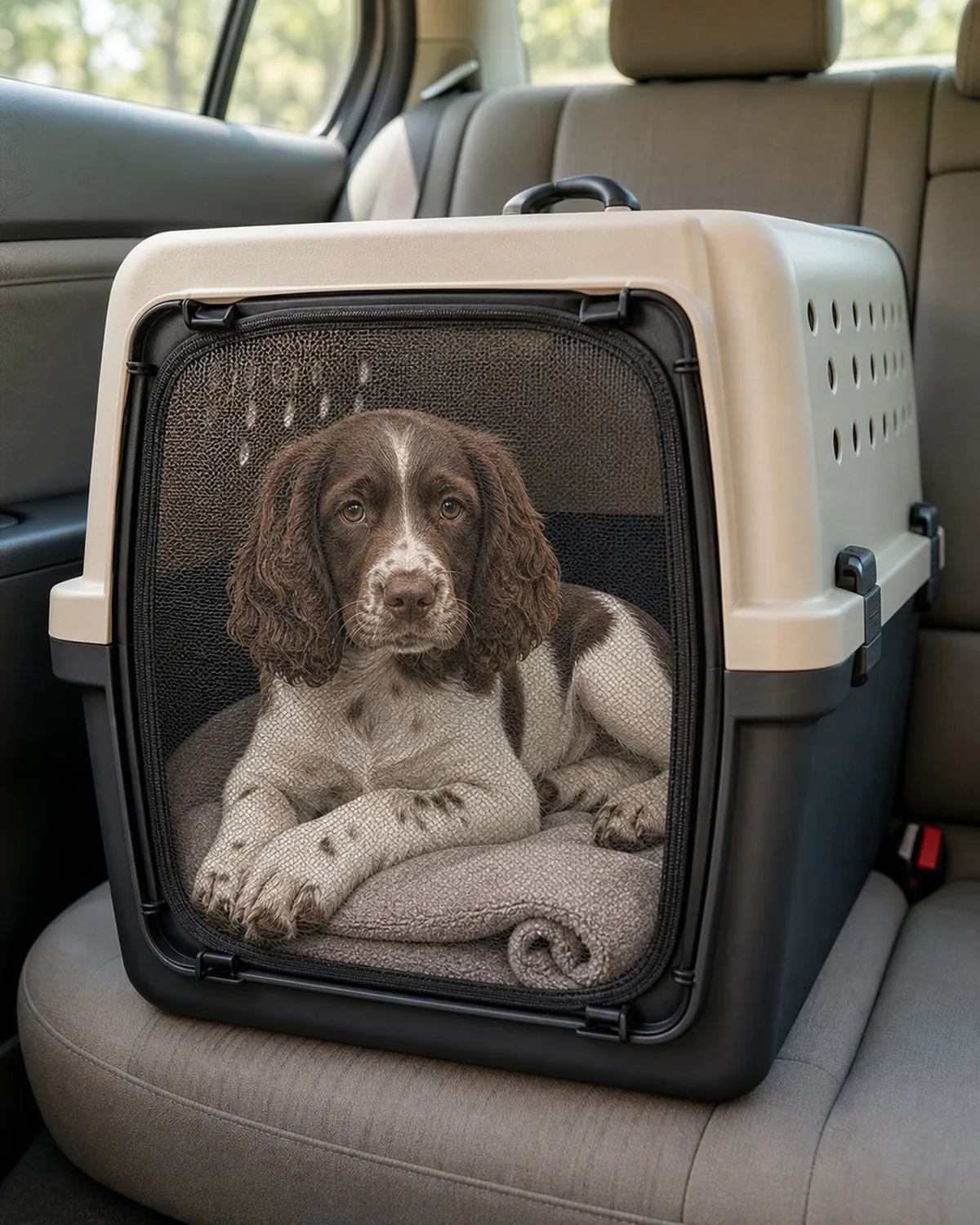
The car ride home is a cooling chamber, not a celebration. She rides inside a carrier or a crate, not loose on a lap and not on the front seat. The carrier sits in the rear passenger footwell or strapped onto the back seat. The front-seat airbag is a real risk for a small puppy in a sudden stop.
Line the carrier with a plain towel that has spent the previous night at the breeder’s or in the rescue’s whelping room. The smell of mother and littermates lowers stress hormone levels measurably for the first hour in a new environment. Add a second clean towel underneath in case of carsick mess.
Three rules for the drive
About a third of eight-to-twelve-week puppies vomit on their first ride. An empty stomach for the two hours before pickup, a cracked window for fresh air, and a quiet cabin lower the odds without medicating a healthy puppy on day one. Skip the radio and skip the phone calls.
Drive straight home. No swing through the pet store for a collar, no grocery stop, no detour to show her to a friend. Every extra stop is another stress event piled on top of the first one. The drive ends at your front door and nowhere else.
- Carrier or crate only, rear seat or rear footwell, strapped down. Front-seat airbag is a real risk.
- Towel from the breeder lining the carrier. Familiar scent measurably lowers first-hour stress.
- Drive straight home with no errands. Every detour piles a stress event on a puppy already at her limit.
A puppy who just left her mother, her litter, and every familiar smell on earth is in the biggest stress event of her life. The first seven days are not a stage for new cues, new visitors, or new dogs. They are a download window. Every quiet hour you give her is a deposit in a trust account that pays out for the next fourteen months.
Hour 1-4 at Home: Backyard Sniff, Water, Quiet Settle

The first four hours at home are not a tour. They are a download window, and the only job of the human is to step back and let her use it.
Out of the car and straight to the patch of grass that will be the bathroom spot. Five minutes of sniffing, no rushing. She will likely pee within those five minutes, and that first pee in the right spot is the start of every potty habit she will keep for a year.
Step back and let her download
Inside, walk her into the yes-zone only. Not the whole house. The kitchen, the off-limit bedrooms, the upstairs landing all stay closed. Information overload at hour one shows up as refusal to eat at hour three.
Show her the water bowl. Open the crate door and walk away. For the next thirty to sixty minutes she explores the yes-zone at her own pace while no human stares, no phone camera flashes, no child grabs her, and no grandparent scoops her up to coo.
Hour one through four is the most over-handled stretch of the whole week. The answer is structural: humans sit on the couch and read while she investigates the rug.
- Bathroom-spot sniff for five minutes before stepping inside. The first pee in the right place starts the habit.
- Yes-zone only, not a whole-house tour. Overload at hour one shows up as refusal to eat at hour three.
- Hands off for the first four hours. No holding, no passing her around, no flash photos.
Night 1: Crate Beside Your Bed, Not in the Kitchen
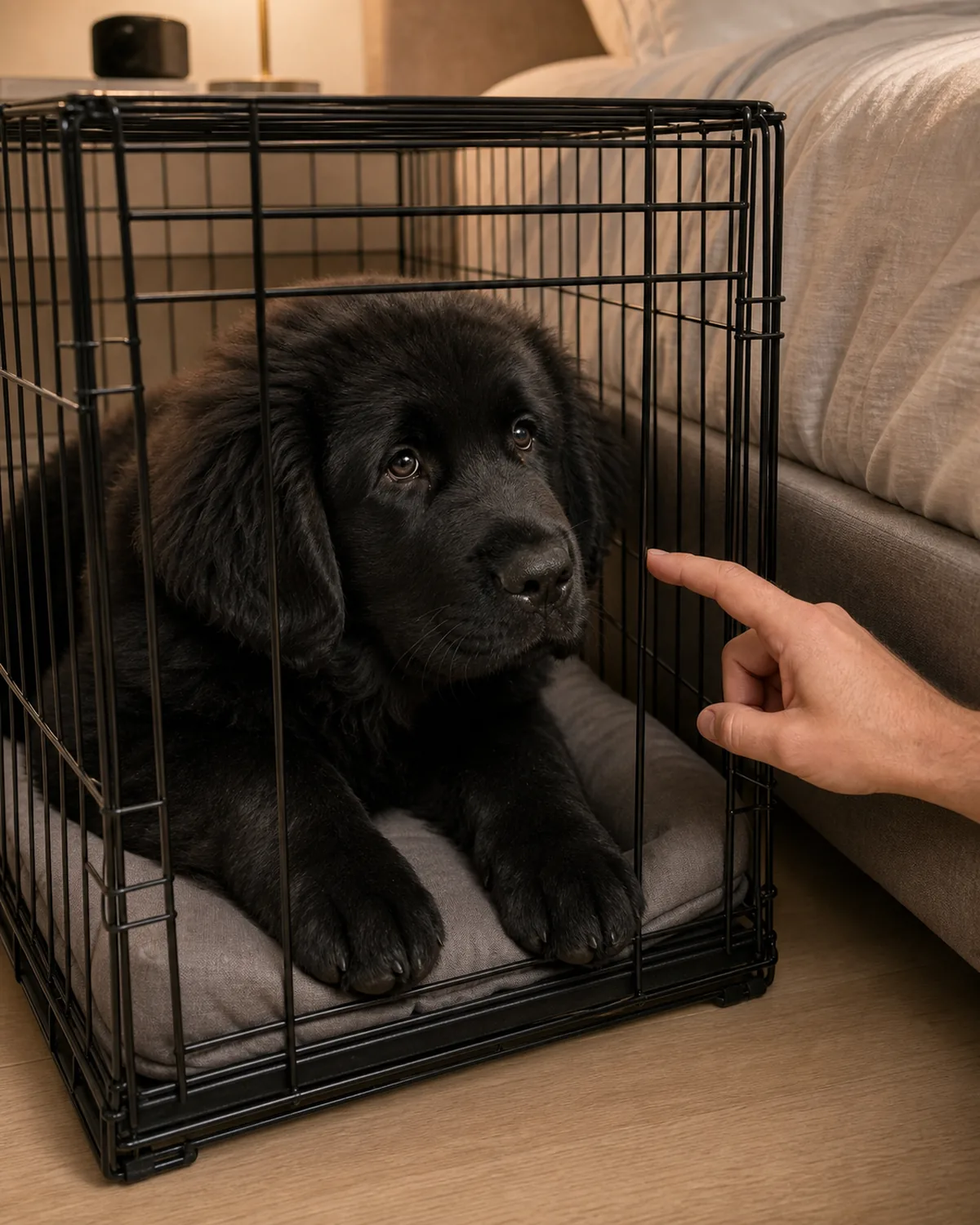
Night one decides whether week two is hard or easy. The crate goes in the primary bedroom, beside the bed, close enough that she can hear you breathe and smell you. The kitchen, the laundry room, and a closed-off room down the hall are all wrong answers. She has slept against warm bodies every night of her life, and a sealed empty room reads as abandoned.
Silent presence is the technique. When she fusses, no scolding, no talking, no lights. A single finger resting on a crate bar from your side of the bed is often enough to settle her in under a minute, because she can smell you and feel a heartbeat near her.
The one allowed potty trip
A persistent thirty-minute cry that does not settle gets one silent potty trip. Lift her out, carry her to the bathroom spot, wait for her to pee, carry her back, and close the crate. No words, no praise, no lights, no playing. The whole trip is under five minutes. An eight-week bladder is roughly three hours, so one or two trips a night is biology, not training failure.
Most puppies need three to five nights of this before they sleep four to six hours unbroken. The old advice to put her in the kitchen and let her cry it out works in the sense that she eventually stops crying. What it actually does is code “no one is coming” into the same circuit that runs adult separation behavior. That is a decade of cost for one quiet night.
- Crate in the bedroom beside the bed every night of week one. Kitchen and laundry room are abandonment.
- Silent presence beats verbal soothing. A fingertip on the crate bar lands harder than any words.
- One silent potty trip per persistent cry, no praise and no lights. Three to five nights and most puppies settle.
Day 1 Full Schedule: Pee → Eat → Play 15min → Nap 2h Cycle
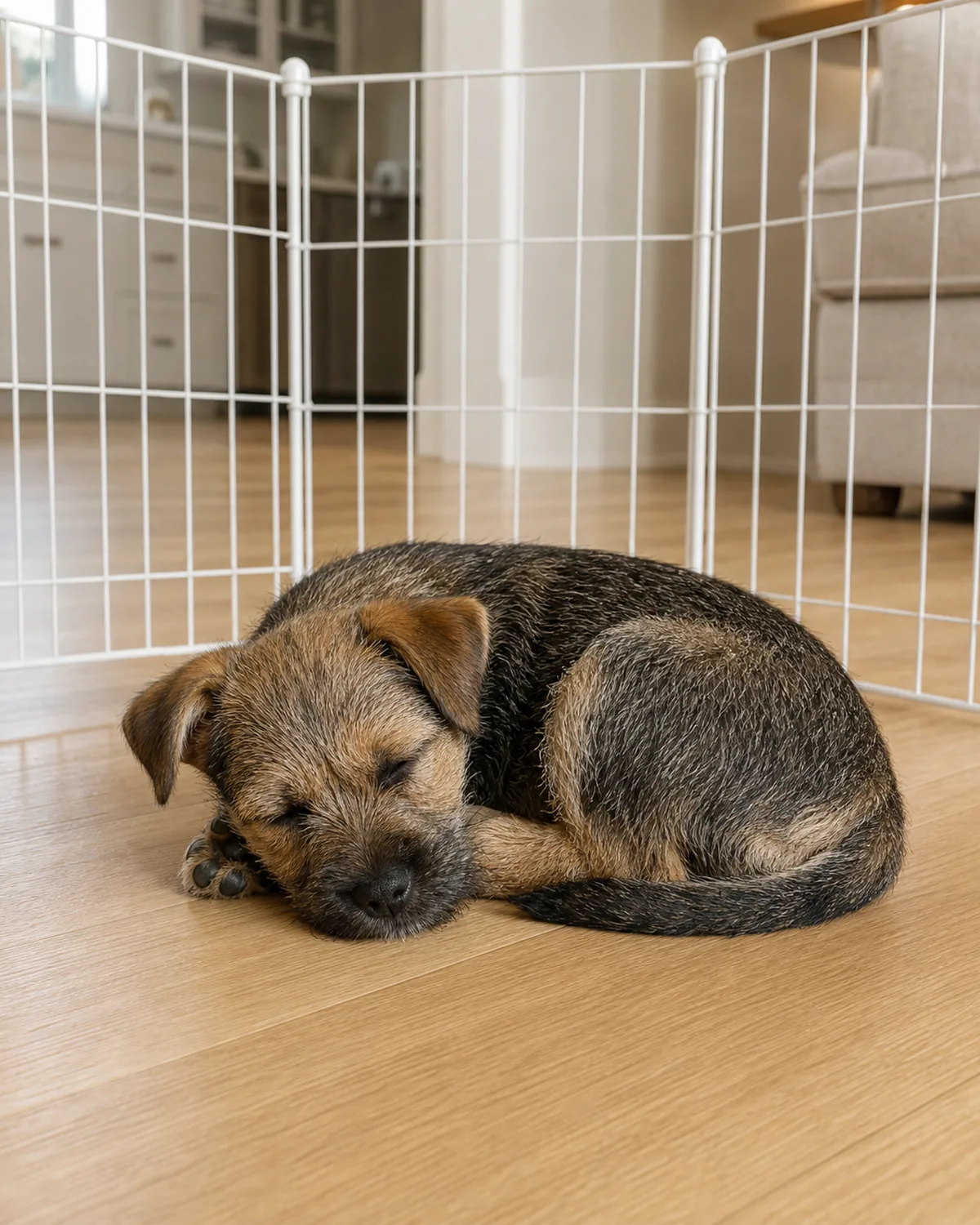
An eight-week puppy needs eighteen to twenty hours of sleep a day. Her awake window before she starts to fray is sixty to ninety minutes. Past that line, every owner sees the same picture: glazed eyes, harder mouthing, zoomies that look manic, refusal to settle. That is not bad behavior. That is overtired.
The day-one cycle is one short pattern repeated. Wake. Potty. Meal. Five to ten minutes of calm play, never chase and never tug. Back to the crate or pen for a two-hour nap. Repeat through the day until the last potty around ten in the evening, then bed.
Naps are the default
The mental shift that fixes most week-one chaos is this: when you are home with the puppy, she should be napping in the crate or pen about seventy percent of the time, not actively playing with you. Owners who treat “she is awake” as “I have to entertain her” produce overtired puppies inside three days.
Read the wind-down signals and act on them inside thirty seconds. Glassy stare, biting hands harder than before, spinning to chase the tail, sudden frantic running — none of those mean “play more.” All of them mean “crate now.” Cycle her in for two hours and start again.
- An eight-week awake window caps at sixty to ninety minutes. Anything beyond it codes as overtired meltdown.
- Naps are the default state, not the gap between play sessions — about seventy percent of “home time” is sleeping in the crate.
- Glassy eyes plus harder mouthing equals nap-now — those signals are her asking for the crate, not for more play.
Most of the “my puppy hates me” panic posts in week-one forums trace back to a violation on the right side of this card. Read both columns once before pickup day, then again at lights-out on night one.
Always Do
- Place the crate beside your bed for at least the first seven nights, never in the kitchen or garage.
- Keep the puppy on the same food the breeder or rescue was using for five to seven full days.
- Cap every awake window at sixty to ninety minutes and put her back in the crate for a two-hour nap.
- Carry her on a leash straight to the same potty spot the moment she wakes, eats, or finishes play.
- Keep arrival day quiet: lights low, voices low, no party, no welcome guests in the first 24 hours.
- Limit visitors to four known calm adults total for the entire first week, one short meeting at a time.
- Book the first vet visit within 72 hours of pickup and bring a fresh stool sample for the baseline check.
Never Don’t
- Never bathe a puppy in week one — her stress cup is already full, soap and dryers tip it over.
- Never let a puppy free-roam the kitchen or any room you have not actively proofed and gated.
- Never snatch an object out of her mouth — trade up with a high-value treat every single time.
- Never let strangers, neighbors, or delivery folks touch her during the first seven days at home.
- Never introduce other dogs this week, not even the neighbor’s “very gentle” fully vaccinated dog.
- Never switch food cold turkey to a new brand, topper, or raw add-in within the first ten days.
- Never raise your voice on potty accidents — clean with enzyme cleaner and walk away calmly.
The Three-Tier Calm Protocol: Visitor Limits, Decibel Cap, No Other Dogs Yet
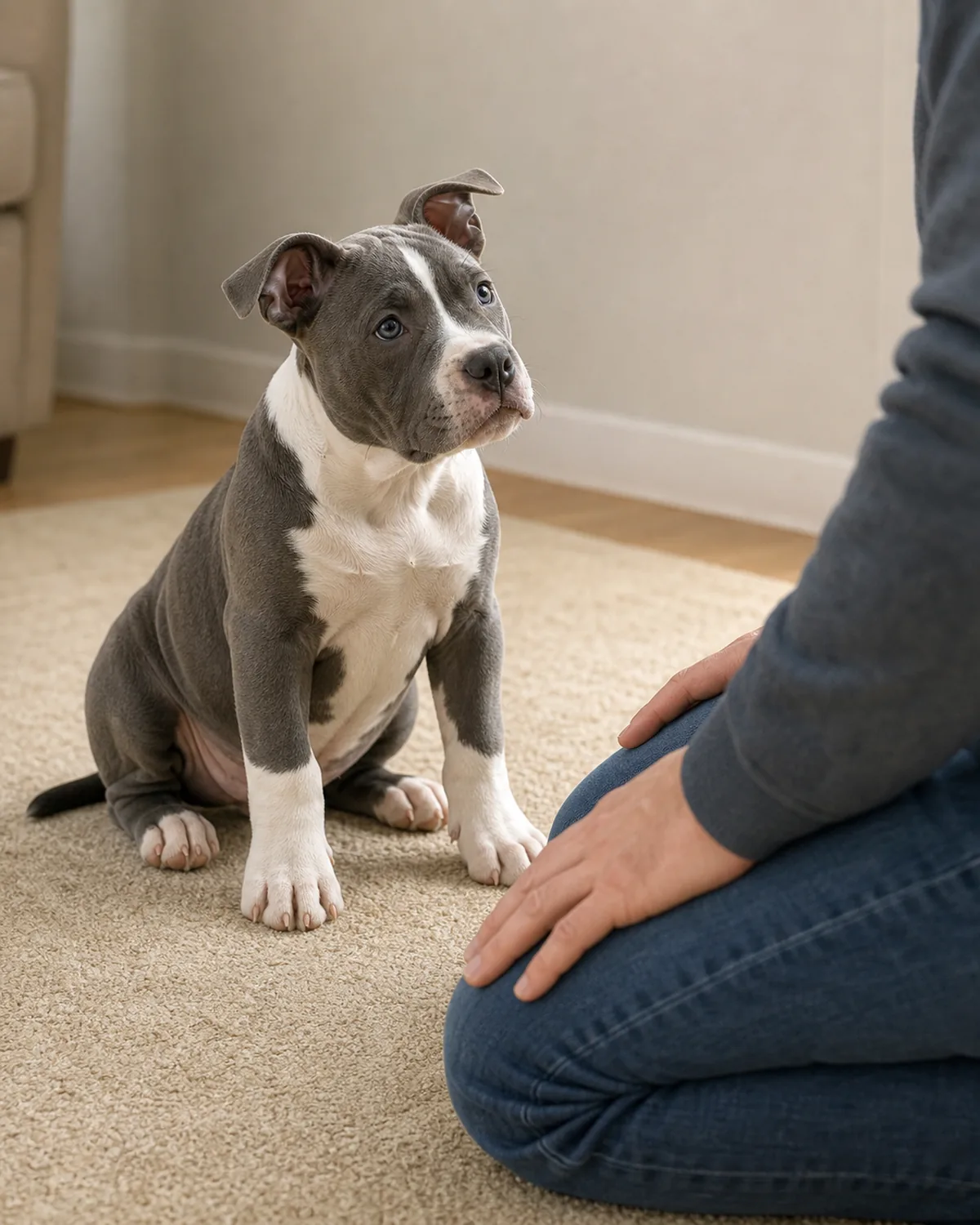
Socialization is critical from eight to sixteen weeks. It is also disastrous if rushed during the first seven days, because the cost of one bad encounter at week one is far higher than the cost of one missed encounter. The week-one rule is restraint, and the rest of the socialization window gets the volume work.
Tier one is household. Cap the immediate family at four people, kneel low to greet, no scooping into the air, no loud laughing, five minutes per greeting and then she retreats to the pen. Tier two is outsiders. Friends, neighbors, the delivery driver — none of them touch her during week one. They see her at a distance and that is it.
Other dogs are a hard zero
Tier three is other dogs, and the answer for week one is zero. Her vaccine series is incomplete and parvo lives in the environment for over a year. The friendly neighbor dog who “has all her shots” is still not worth the risk on a partially vaccinated puppy. Save the dog-dog work for after the sixteen-week vaccine completion.
The decibel cap is the missing piece for most families. The vacuum, the hair dryer, the smoke alarm test, the dinner party — all of those get postponed for the first seven days. Children get one rule: kneel down quietly, no chasing, no carrying, no kissing, no poking. A single negative encounter in week one writes a fear circuit that takes three times the work to rewire later.
- Four household humans, kneeling-low five-minute greets — no outsiders allowed near the puppy this week.
- Zero other dogs for week one regardless of “she’s vaccinated” claims — parvo math is not worth one playdate.
- Postpone the vacuum, the dryer, the smoke test, and the dinner party — one bad scare codes a fear circuit three times harder to rewire later.
Feeding Week One: Same Food as Breeder, Slow Transition
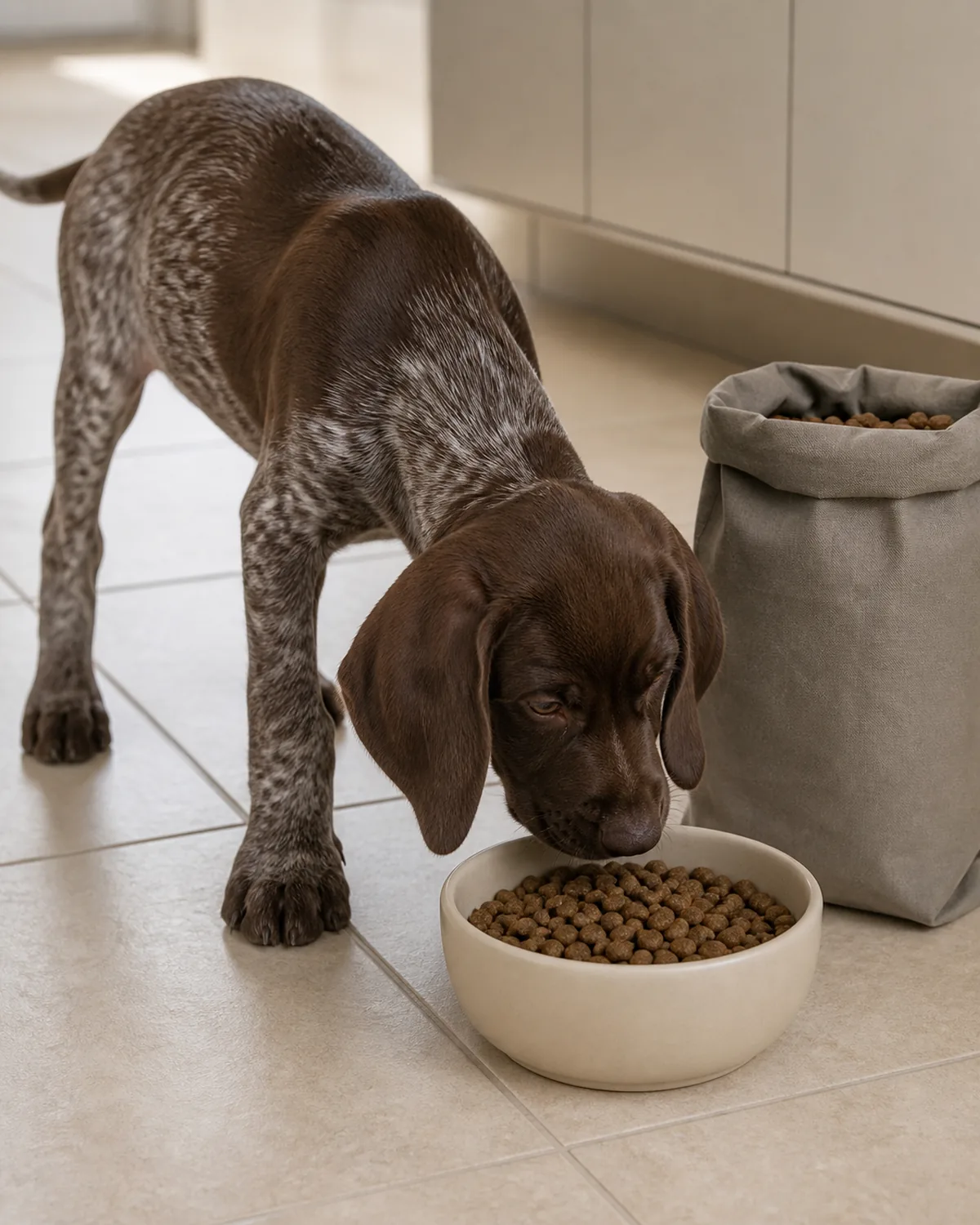
Whatever the breeder or rescue has been feeding her, that is what you feed for the first five to seven days. Same brand, same formula, same portion structure. Then transition over seven to ten more days: a quarter new and three quarters old, then half and half, then three quarters new, then full new. Change food and environment together and soft stool is almost guaranteed.
An eight-week puppy eats four meals a day. The full portion math and the calorie ladder by weight live alongside the deeper feeding work, because this is a week-one decompression article and the nutrition table belongs in a deep guide rather than a single bullet here.
What is normal and what is not
A single skipped meal in week one is normal. Stress plus environment change suppresses appetite for one cycle, and she eats the next one. A full twenty-four hours of refusing both food and water is not normal and is a vet call, not a wait-and-see.
One or two episodes of soft stool inside the first week are normal. Blood in the stool, watery diarrhea more than three times, or vomit more than twice is a vet call right then.
Skip every human-side fix. No Pepto, no Imodium, no Tylenol, no human anti-diarrheal of any kind. Many of them are toxic to dogs at common pet doses, and the vet phone call is faster and cheaper than the ER visit they cause.
- Same food as the breeder for five to seven days, then a seven-to-ten-day quarter-by-quarter transition — never an instant switch.
- One missed meal in week one is normal — twenty-four hours of refusing food and water is a vet call.
- No Pepto, no Imodium, no Tylenol, no human anti-diarrheal — many human drugs are toxic to dogs at common pet doses.
Introducing the Crate Without Forcing It
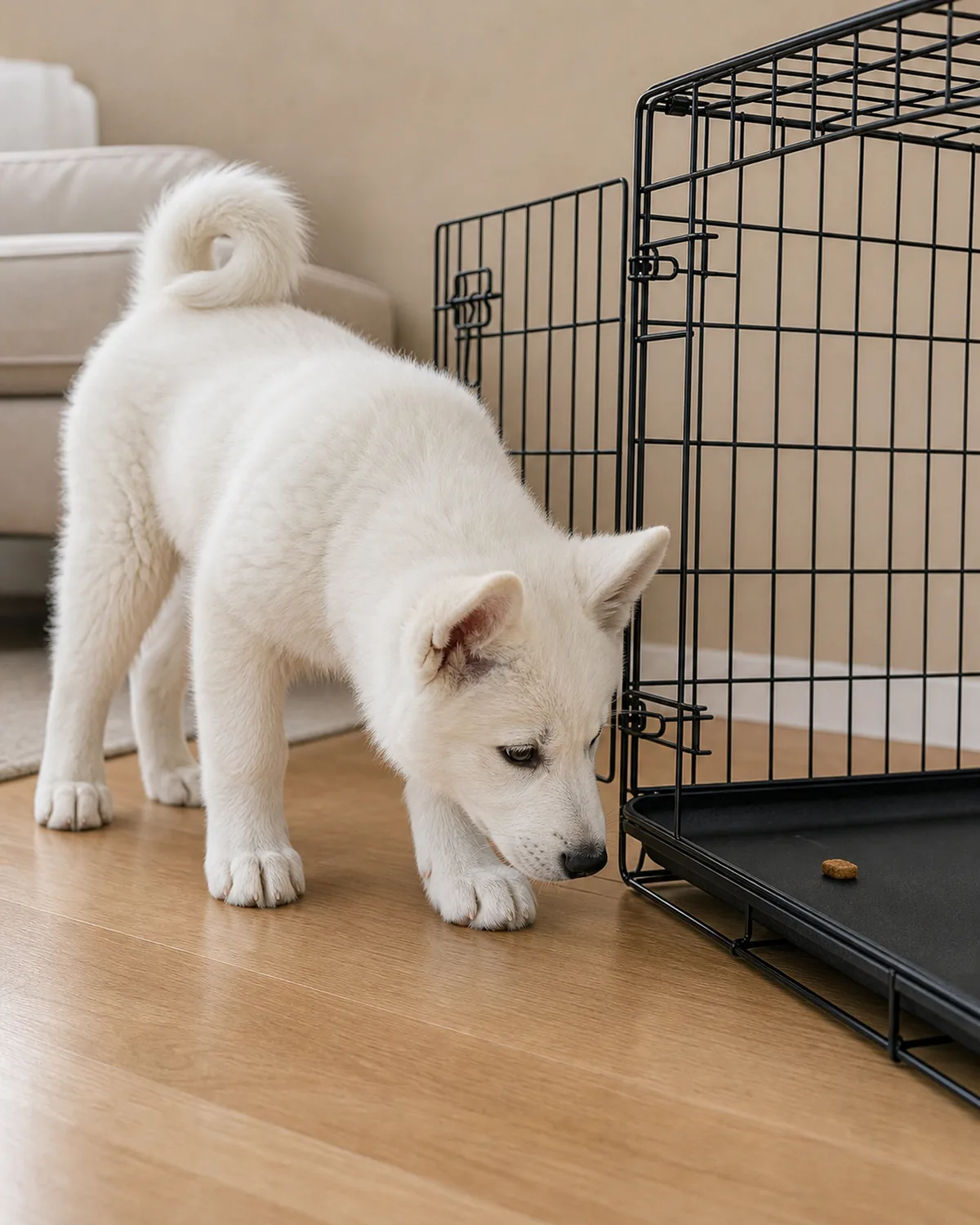
Week-one crate work is passive, not active. The door stays open all day. A soft bed and the towel from the breeder live inside. She walks in and out at her own pace, on her own schedule, with no one pushing or pulling her through the opening.
Toss a treat into the crate every time you walk past. She follows it in, gets the treat, walks out — and the crate slowly becomes the place where good things appear. After two or three days of that, move her meal bowl from outside the crate, to the doorway, to the back wall over five days. By the end of week one she eats every meal inside the crate with the door still open.
The first closed door
The first time the door closes is at the end of a meal, with her facing in. Thirty seconds, you standing right beside it, then open and praise. Build from there in single-minute increments. The first time she stays inside with the door closed for ten minutes is week two work, not week one.
The full day-by-day crate adaptation ladder, the cry-and-quiet-and-wait timing, the upper limits on crate time by age in weeks, and the regression handling all live in our guide on how to crate train a puppy. Week one builds the relationship. The deep training builds on top of it.
- Door open all day in week one — treats appear inside, the bed lives inside, but no one shoves her in.
- Meal bowl migrates from outside to inside the crate over five days — by day seven she eats every meal in there willingly.
- Never open the door while she is fussing — opening on a cry codes “make noise and the door opens” into the same circuit you want quiet from.
The Puppy First-Week Quick Card
7-day at-a-glance
- Day 1 — quiet arrival, backyard sniff, yes-zone only, crate beside the bed by lights-out.
- Day 2 — same food, same schedule, expect one rough night with silent presence at the crate.
- Day 3 — routine starts to settle, two short calm play sessions, still zero outside visitors.
- Day 4 — first vet visit with stool sample, fresh towel on the exam table, puppy off vet floors.
- Day 5 — passive crate door-closed practice for thirty seconds, then one minute, then five.
- Day 6 — name game and sit-lure in three 30-second reps, treats stay inside the 10% calorie cap.
- Day 7 — milestone check: sleeping 4-6 hours straight, eating full meals, responding to her name.
Wake window cap
- 8wk puppy — 60 minutes max awake, then crate nap
- 10-12wk — 75-90 minutes max, then crate nap
- Default state — nap, not play (target 18-20 hours sleep)
Visitor & feed limits
- Visitors — 4 known calm adults total, week one
- Other dogs — zero until full vaccine series
- Kids — age 5+, kneeling only, one at a time
- Food — same brand 5-7 days, then 7-10 day transition
- Meals — 4 per day at 8 weeks, scheduled not free-fed
- Treats — cap at 10% of daily calories
Day 7 milestones
- Sleeps 4-6 hours straight at night
- Eats full meals, no refusals 24h+
- Stool firm, no blood, no water
- Enters open crate on her own to nap
- Looks up when you say her name
- Vet baseline done, next vaccine on calendar
- Calm in yes-zone for 30-60 minute stretches
Emergency hotlines — save now
- ASPCA Animal Poison Control 888-426-4435
- Pet Poison Helpline 855-764-7661
- Your regular vet + a 24-hour emergency vet on speed dial
PAWLIQA · NEW DOG OWNERS
Vet Visit Within 72 Hours: What to Bring and What to Ask
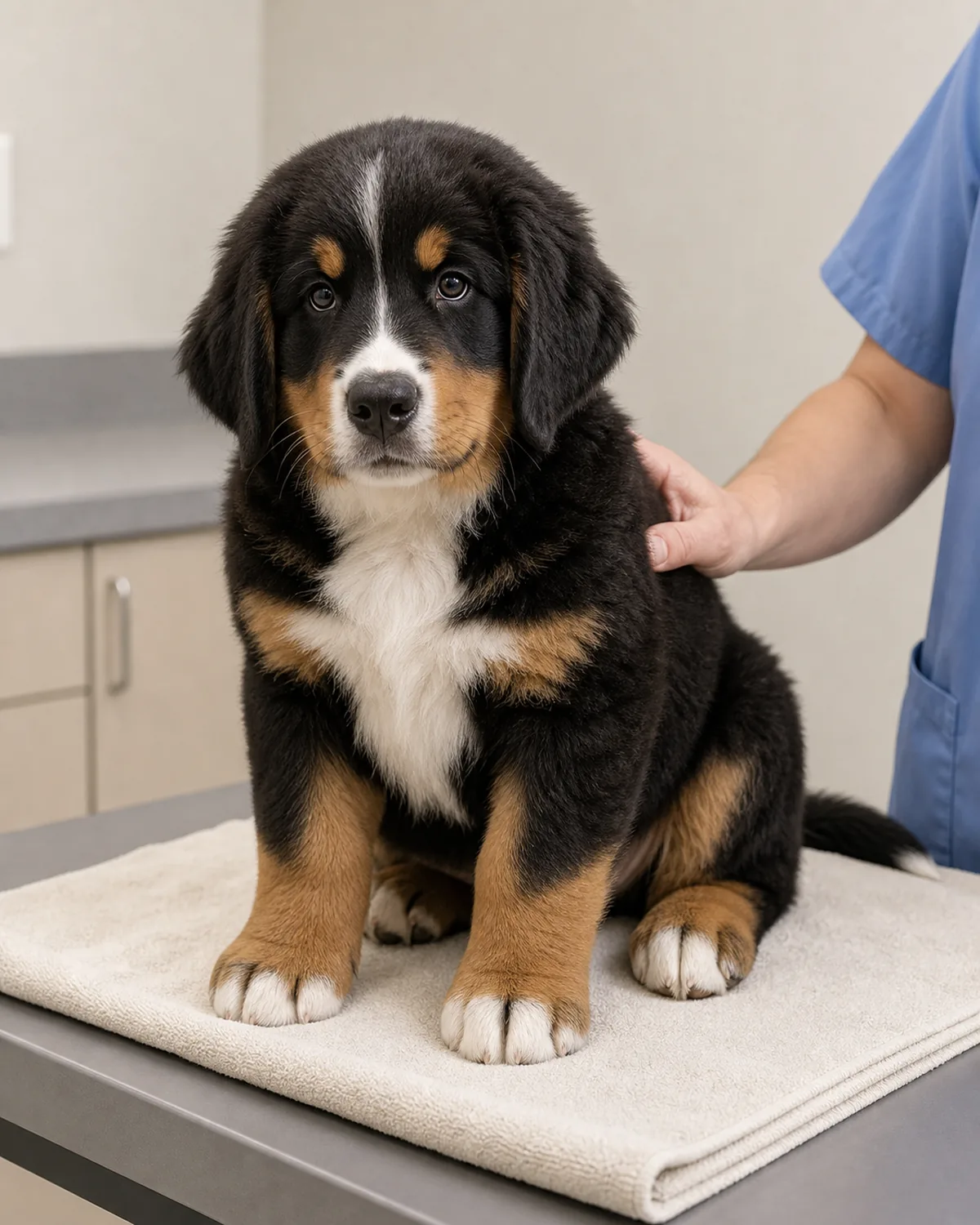
The first vet visit happens inside seventy-two hours of pickup. Not next week. Not “when we get around to it.” The window matters because she needs a baseline exam, a parasite check, a vaccine schedule confirmation, and a microchip status read while the breeder paperwork is still fresh in your hands.
Bring four things. The breeder or rescue health record with deworming and vaccine dates. A fresh stool sample sealed in a plastic bag from the last twelve hours. A phone photo of the current food bag for the vet’s nutrition note. A written list of questions so you do not forget half of them at the desk.
Parvo precaution in the lobby
In the waiting room, hold her on your lap or ask the front desk for a towel to lay on the floor under the carrier. A partially vaccinated puppy does not touch a vet clinic floor where every parvo-positive dog in the county has walked that month. The parking lot grass between the car and the door is the same rule.
Ask for the next vaccine date written down, the deworming schedule, the heartworm preventive start age, and the flea and tick plan. Ask for the clinic’s after-hours number and write it on the index card on your fridge that same evening. The seventy-two-hour visit is also her first outing — your calm in the waiting room codes her future relationship with vet clinics.
- Visit inside seventy-two hours with the breeder record, a fresh stool sample, the food photo, and a written question list.
- Never put a partially vaccinated puppy on a vet clinic floor — lap or folded towel only, parking lot included.
- Leave with the next vaccine date written on paper and the clinic’s after-hours line added to your fridge card.
Reading Stress Signals: Lethargy vs Tired, Loose Stool, Refusing Food
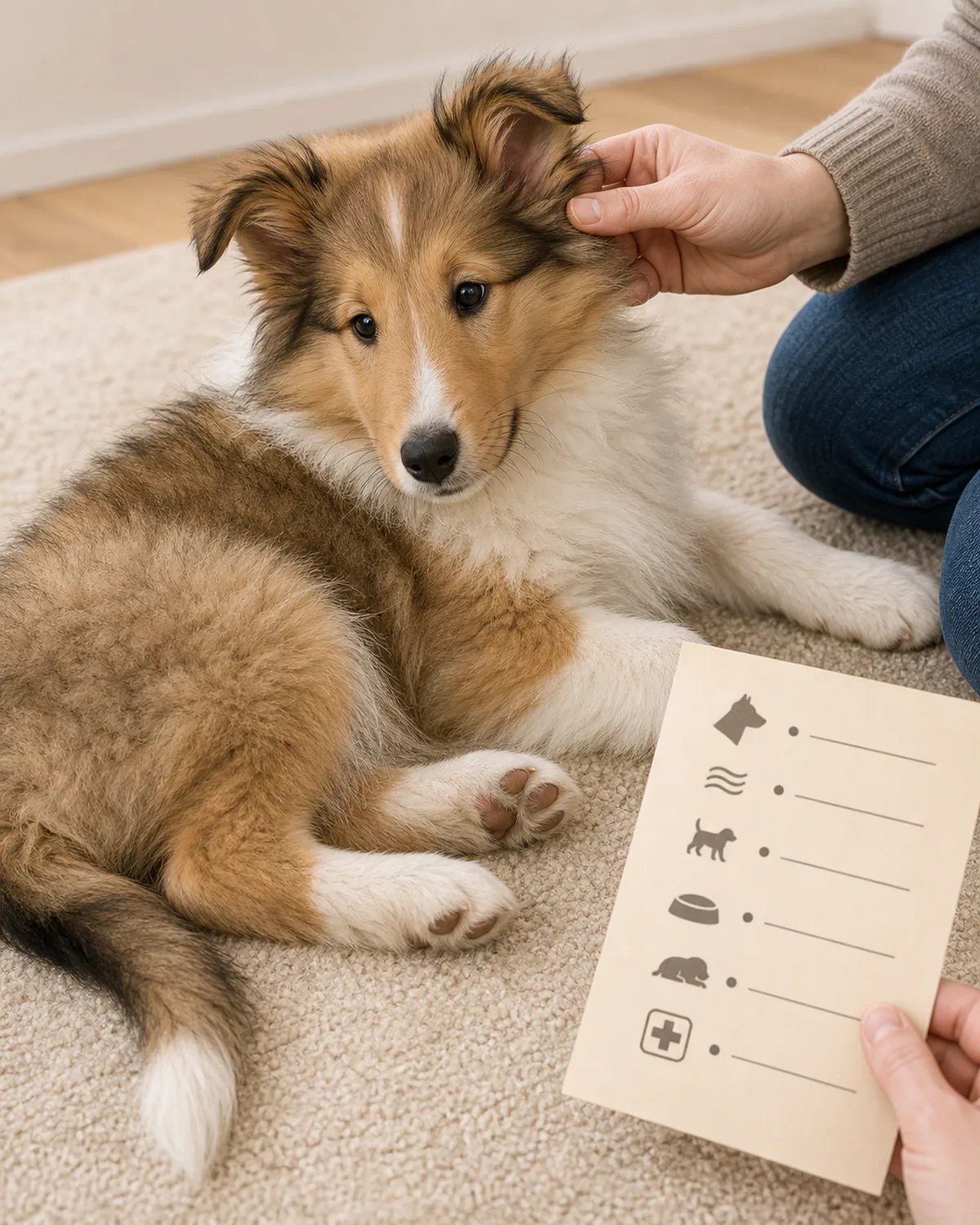
The first-week anxiety question every new owner asks is “is this normal or is this a vet call?” The triage is not hard once the categories are clear, and it does not replace a vet — it tells you when to call one.
Normal in week one looks like this. Eighteen to twenty hours of sleep a day. One or two soft stools as the gut adjusts. A single skipped meal at the next cycle. Light sneezing from new household dust. Mouthing on hands as she investigates. One or two cries a night that settle with silent presence.
Call the vet, do not wait
The call-now list is shorter and clear. Sleep so deep you cannot wake her with normal touch or sound for more than twelve hours. Blood in the stool, bright red or dark. Watery diarrhea more than three times. A full day of refusing both food and water. Vomit more than twice or with blood.
Pale or blue gums where healthy looks pink. A temperature below ninety-nine or above one hundred and three degrees taken rectally. Labored breathing, open-mouth panting that does not stop, or a blue tongue. Any seizure or sudden collapse. A swollen drum-tight belly. Thick green or yellow discharge from eyes or nose.
Three numbers stay on the fridge for exactly this moment. Your day vet. The nearest twenty-four-hour emergency vet. ASPCA Animal Poison Control at (888) 426-4435 with Pet Poison Helpline at (855) 764-7661 as backup. Skip every human drug. Pepto, Imodium, Tylenol, Advil are all toxic to dogs at common pet doses.
- Normal: eighteen-to-twenty-hour sleep, one to two soft stools, one skipped meal, light mouthing, settling cries at night.
- Call the vet on: unrousable sleep over twelve hours, blood in stool, watery diarrhea, full-day food-and-water refusal, repeat vomit.
- Also call the vet for: pale gums, abnormal temperature, labored breathing, seizure, swollen belly, colored eye or nose discharge.
- Never give Pepto, Imodium, Tylenol, or Advil — many human drugs are toxic to dogs and the hotline call is faster than the ER they cause.
The Name and 3 Basic Cues: Sit, Come, Look (Light Positive Only)
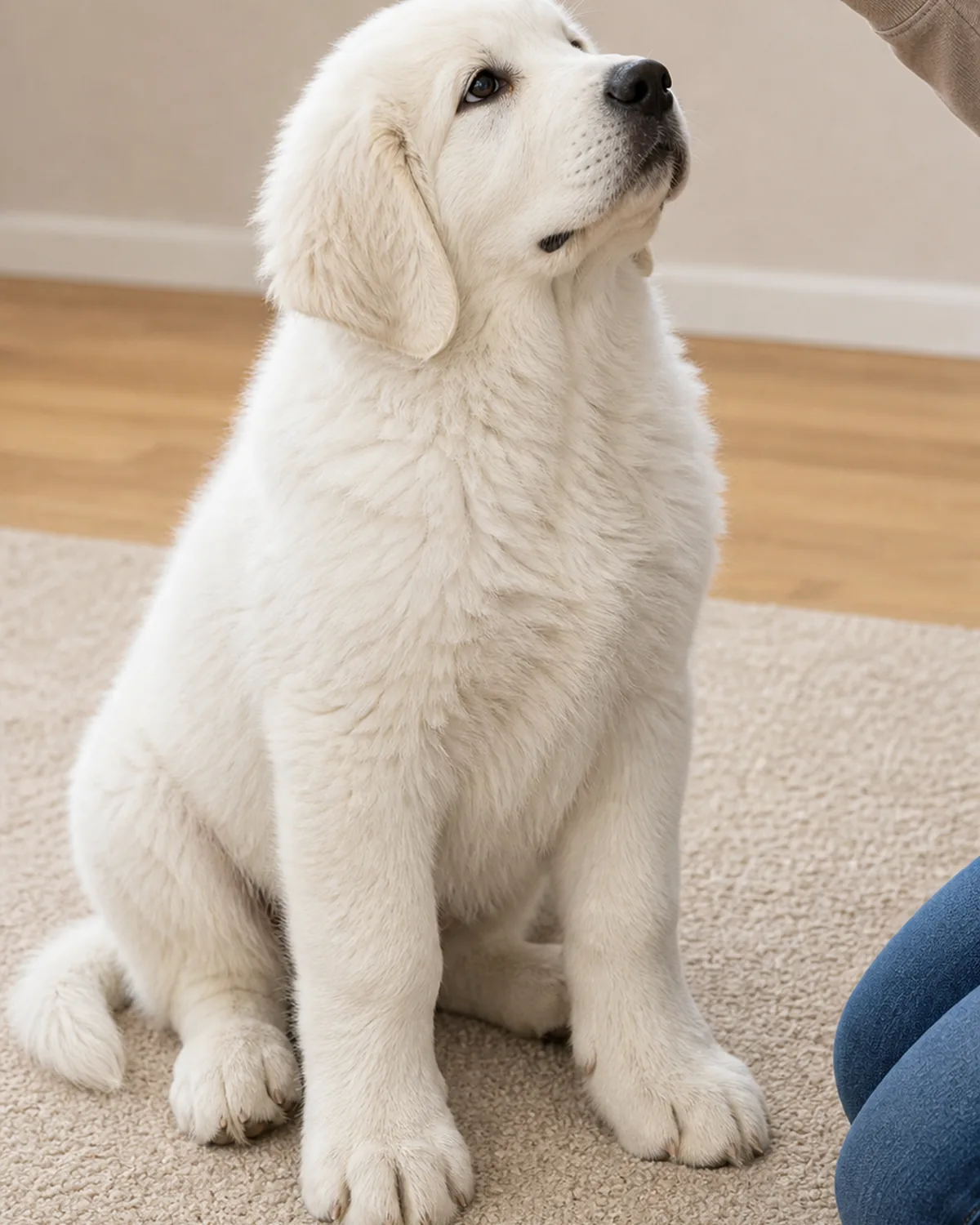
Week one is not a training week, but four light-positive markers do go in. They are about wiring “human in the room equals good things,” not about cues she can perform on demand. Thirty seconds per session, three to five sessions a day, and the treats stay inside ten percent of her daily calorie budget.
Her name becomes a hundred-percent positive marker. Say her name once, mark with a yes, hand over a small treat. Never use her name to call her over for a nail trim, a deworming pill, or anything she would rather avoid. Names that predict bad things stop working inside a week and you spend months rebuilding them.
Four markers, no formal cues
A loose sit lure. Treat held in front of her nose, lifted slowly back over her head. Her bottom drops to find balance. Mark, treat. After a few days she sits on the lure, and the lure fades over the following two weeks.
Indoor recall at three feet. Say her name in a happy voice, she walks over, mark and pay with two or three treats stacked. A look-at-me marker. Any time she chooses to glance at your face on her own, mark and treat. That last one is the most valuable wire of the four.
What is not on the list is everything else. No down, no stay, no heel, no leash walking outside, no real recall in distractions. Those are six-month projects, not week-one projects. An eight-to-twelve-week attention span is about thirty seconds, and your only job is to make those thirty seconds feel safe and rewarding.
- Name is a hundred-percent positive marker — never use it to call her over for anything unpleasant.
- Thirty seconds per session, three to five sessions a day, treats inside ten percent of daily calories.
- Skip down, stay, heel, and outdoor recall — week one builds the wire that “human equals good,” not a list of cues.
End of Week 1: What to Expect by Day 7 and What’s Next
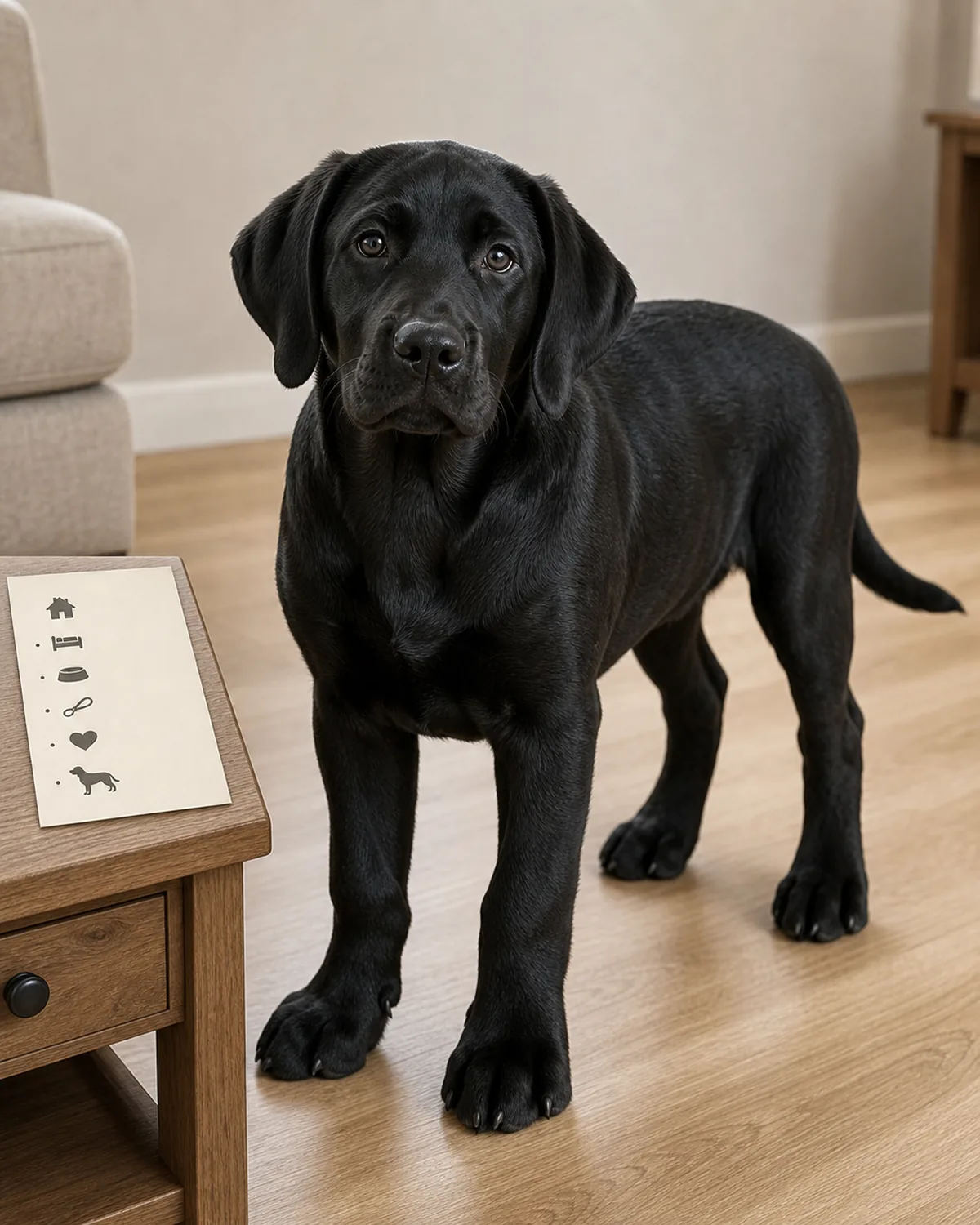
Day seven is not a finish line. It is a checkpoint. The puppy who hits these markers has had a successful first week, and the foundation for the next fourteen months is solid.
Sleep cycles have settled. Four to six unbroken hours at night, voluntary naps in the crate or pen during the day. She moves around the yes-zone for thirty to sixty minutes at a stretch without panic. She answers to her name nearly every time you say it.
She walks into the open crate on her own to rest. The vet baseline is on paper and the next vaccine date is written on the calendar. Soft stool, skipped meals, and night crying have evened out.
What week two through four looks like
What is not done is fine. Full parvo coverage waits for the sixteen-week vaccine. Real outdoor walking waits for that same vaccine completion. Distance recall, leash skills, and puppy class all sit in the weeks ahead.
Week two and onward, the workload shifts. Crate work goes deep in the full crate guide referenced above. Potty schedule weekly tables and the longer socialization plan after vaccines belong in their own deep guides. Food transition wraps up in the second week.
Every choice in week one was an investment in this. A puppy who feels safe at day seven is a puppy whose owner has already saved themselves a year of behavior unwind.
- Day seven checkpoints: settled sleep, calm yes-zone roaming, reliable name response, voluntary crate naps, vet baseline on paper.
- What is not done is fine — full vaccine coverage, outdoor walks, and distance recall all sit ahead of week one.
- Week one was the trust foundation — every later guide builds on top of “she feels safe in this house.”
Jess Calloway edits Pawliqa, where she shares dog care, grooming, training, and new-owner tips — plus DIY and pet-friendly home ideas — for anyone who wants a happy, well-cared-for dog. As a dog mom to three very different dogs, she writes the honest, tested version of what actually works. This first-week guide covers the 24-hour pre-pickup setup, the quiet car ride home, the first-night crate-beside-the-bed protocol, the day-one hour-by-hour schedule, the three-tier calm framework, the slow food transition, the 72-hour vet visit, the stress signals that need a phone call, and the day-7 milestones that tell you week one went right. Every guide is image-led and reviewed for clarity, usefulness, image accuracy, and Pinterest-to-page alignment before it goes live. Visit the About page.