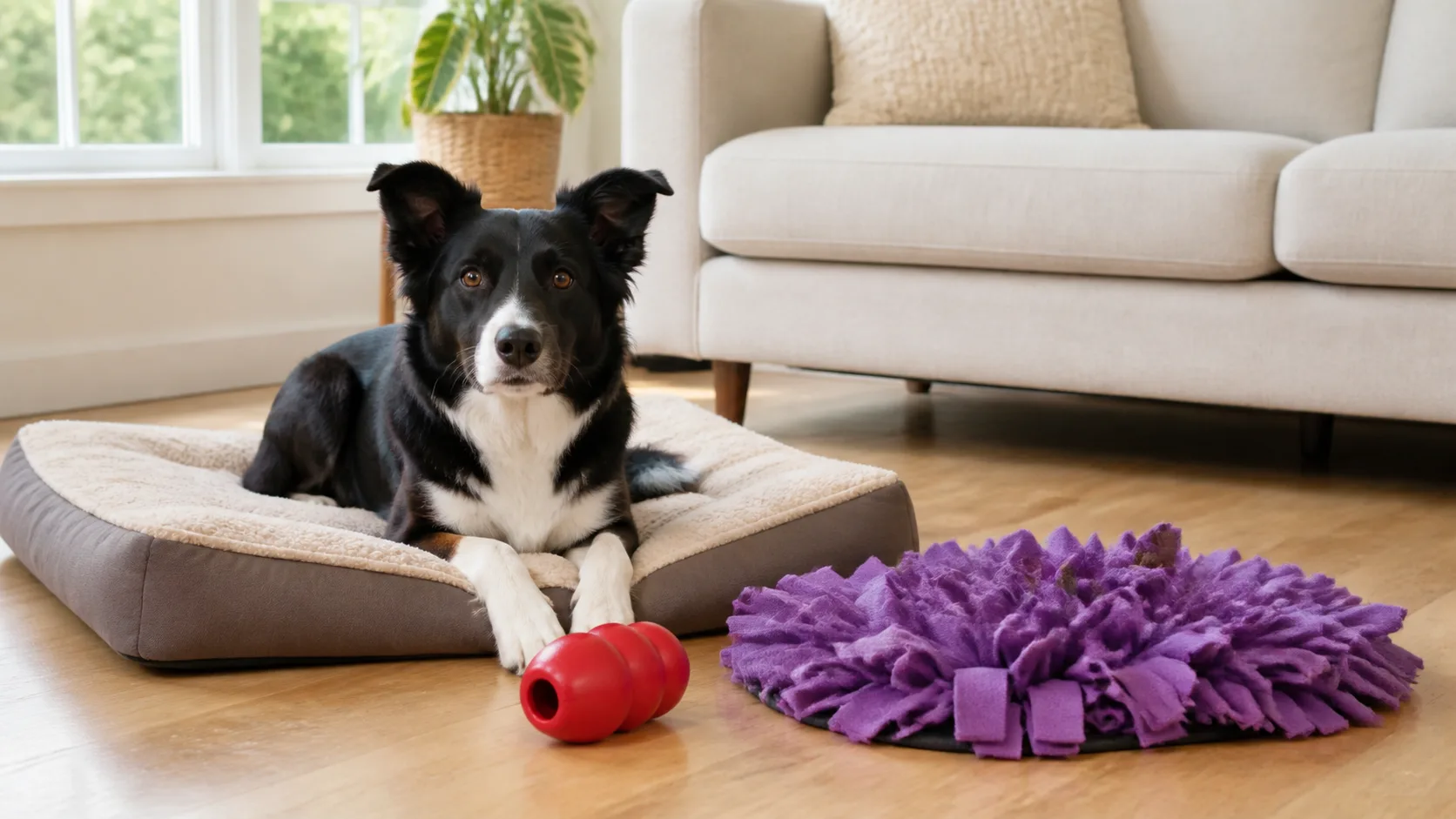
A bored dog stuck inside does not rest — it invents a job. In my house that has meant shredded mail, a chewed table leg, and a barking fit at nothing. None of it was spite. It was a working brain with no task.
More walking rarely solves it. What works is mental work: sniffing, foraging, problem-solving — effort that drains a dog far faster than another lap around the block and leaves it genuinely, deeply settled.
This guide walks through thirteen enrichment ideas, from food puzzles to toy rotation to DIY games, plus the mistakes that backfire. Every one earned its place with three very different dogs of my own.
Most of the chewing, barking, and digging that looks like “bad behavior” is really an under-worked brain leaking out. Indoor enrichment isn’t a luxury — mental fatigue is the off-switch for boredom, and a dog who has worked for his food and solved a few puzzles settles in a way a second walk can’t match. Here are thirteen ways to put that brain to work without leaving the house.
- 1Why indoor boredom shows up as “bad behavior”
- 2Mental vs. physical exercise: a tired body isn’t a tired brain
- 3Food puzzles and slow feeders: turn every meal into a job
- 4The snuffle mat and scatter feeding: nosework anywhere
- 5DIY enrichment from stuff you already own
- 6Teaching new tricks as real brain work
- 7Chew-based enrichment: the calming power of a long chew
- 8Rotate, don’t pile: the toy rotation system
- 9Frozen and stuffed toys for long settles
- 10Building a rainy-day indoor routine
- 11Enrichment by energy level and age
- 12The 3 enrichment mistakes that backfire
- 13When boredom is actually anxiety: knowing the difference
Why Indoor Boredom Shows Up as “Bad Behavior”
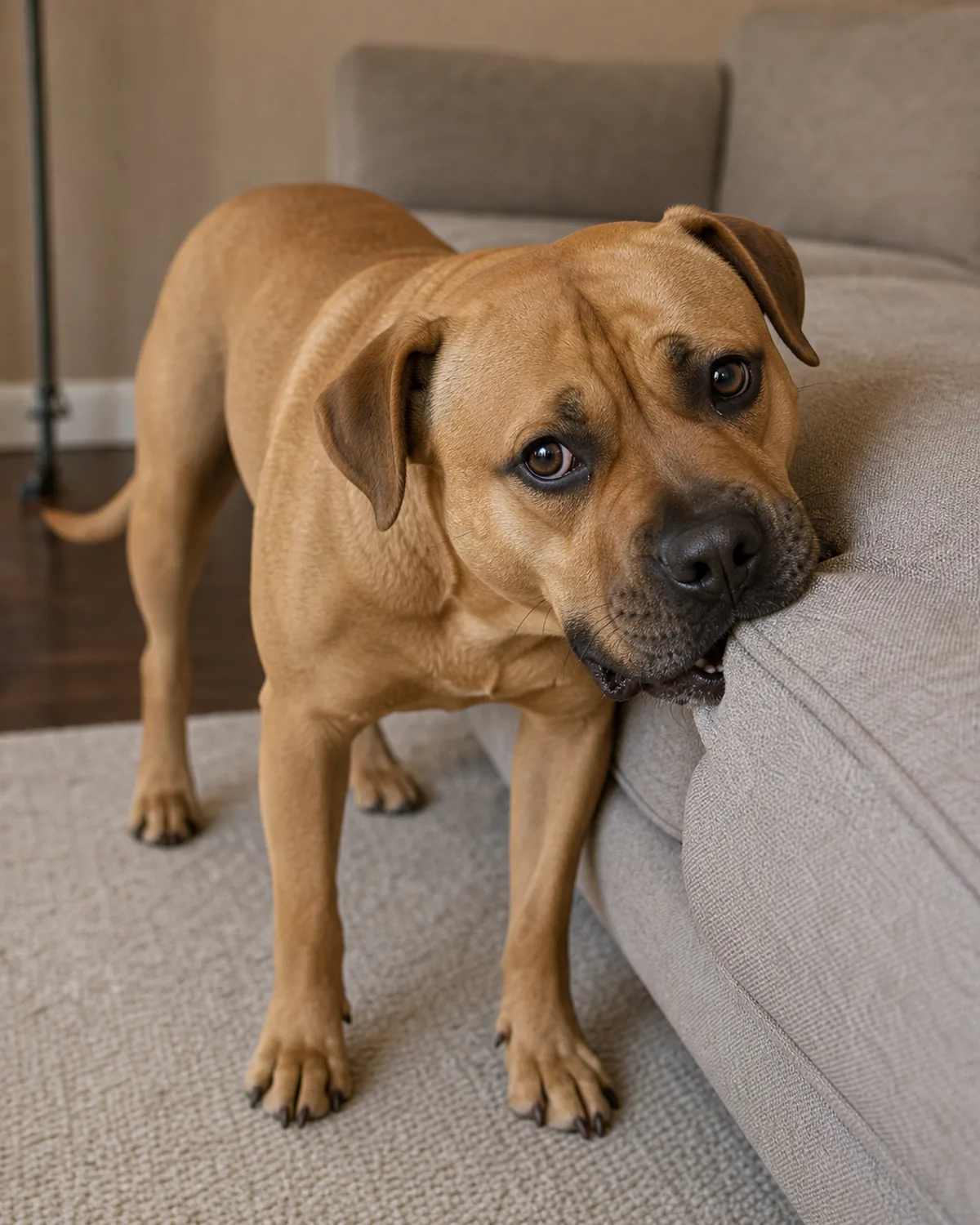
Chewing baseboards, barking at nothing, digging at the carpet, pacing, counter-surfing — these rarely mean a dog is being difficult. An under-stimulated dog has a working brain with no assigned task, so it goes looking for its own. The job it picks is almost never the one you would have chosen.
This is why so much “problem” behavior is really an unmet need leaking out. The energy is going somewhere whether you direct it or not. A dog given something meaningful to do has less drive left over to aim at your furniture.
That reframes enrichment entirely. It is not a treat or a luxury you add when you have spare time. It is the off-switch for most of the behaviors that make living with a dog frustrating. Give the brain a task and the destructive outlets quiet down on their own.
Mental vs. Physical Exercise: Why a Tired Body Isn’t a Tired Brain
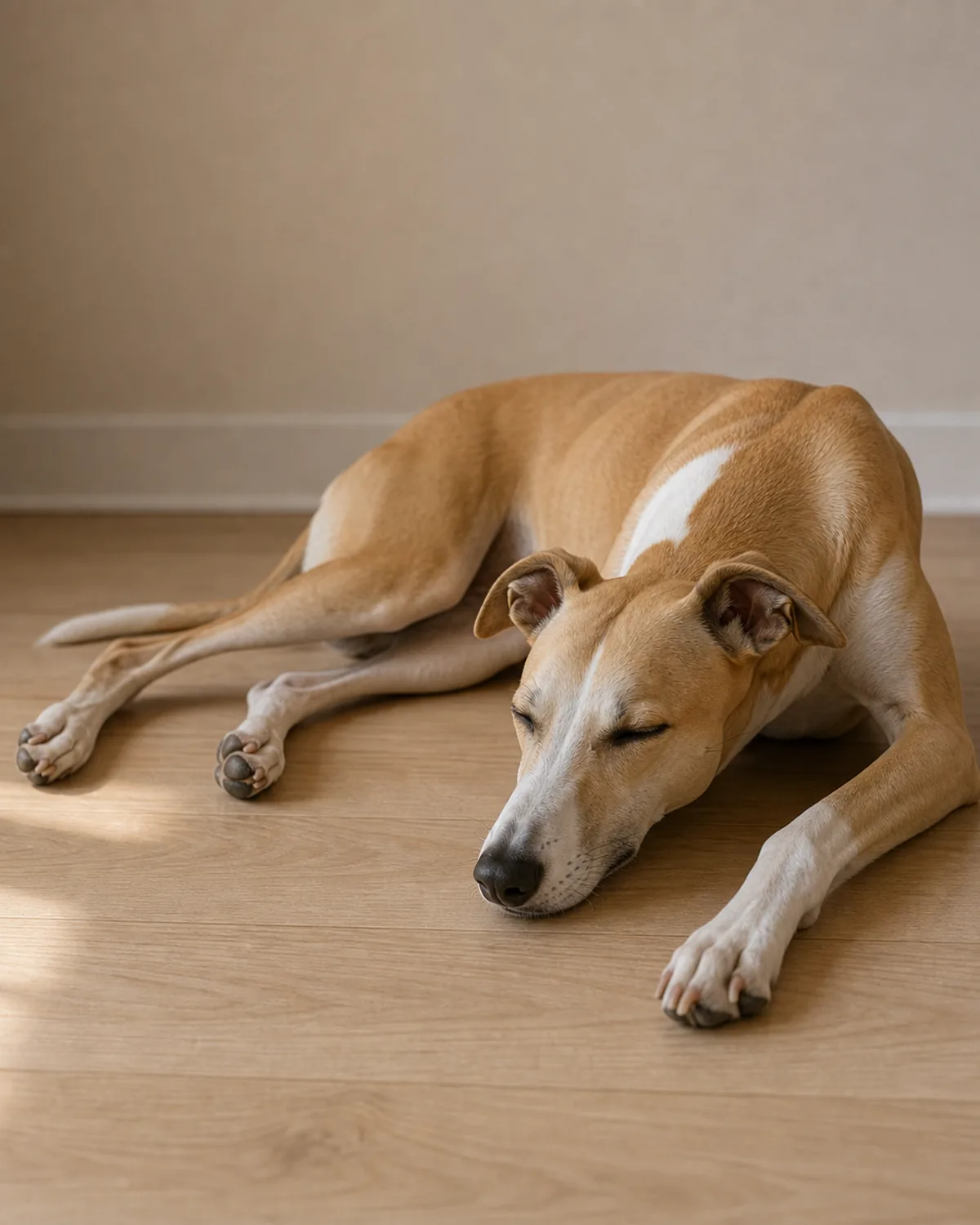
A dog can come home physically wiped from a run and still pace the house an hour later. Physical exertion tires the body, but it barely touches the brain. Sniffing, foraging, and problem-solving fatigue a completely different system — and that system is usually the one keeping your dog restless.
The numbers surprise people. Fifteen minutes of focused nosework often settles a dog more deeply than a second walk would. Cognitive load and scent processing tax the brain directly, producing the heavy, satisfied rest that physical movement alone tends to miss.
The order matters, though. Meet your dog’s daily exercise quota first, then layer mental work on top. The two complement each other — they do not substitute. A dog with pent-up physical energy struggles to focus on a puzzle.
Think of it as two tanks that both need draining. Most owners only ever empty one and wonder why the dog never fully settles.
Food Puzzles and Slow Feeders: Turn Every Meal Into a Job
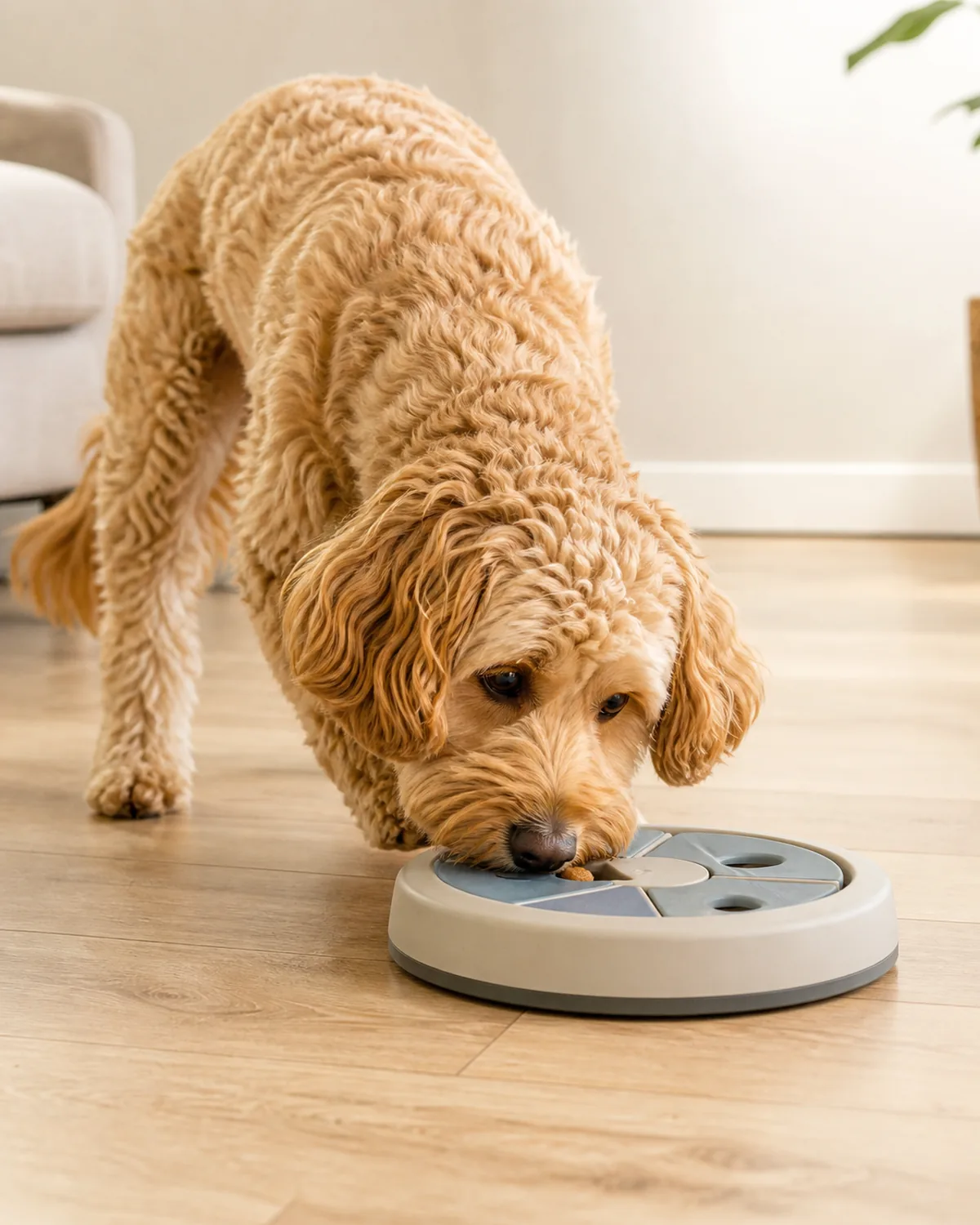
The food bowl is a missed opportunity. A dog inhales a bowl of kibble in ninety seconds and learns nothing. Swap it for a puzzle feeder, a slow bowl, or a treat-dispensing ball and that same meal becomes ten or twenty minutes of work for every bite.
Start easy. Use a puzzle where the food is visible and the pieces are loose, so the dog wins quickly and stays interested. As your dog solves each level confidently, ladder up the difficulty. The point is a steady stretch, not instant frustration.
The reason this works is that foraging for food is hardwired and self-rewarding. The dog is not enduring the puzzle to reach the food — the searching itself is the payoff. You are tapping a built-in drive rather than imposing a chore.
A stuffed puzzle or Kong doubles as the most reliable tool for a quiet crate settle. Hand it over as the crate door closes and the dog ties the space to calm, absorbing work instead of confinement.
The same building blocks — foraging, puzzles, nosework, chews, trick work — suit every dog, but the right starting difficulty and dose depend on the individual. A high-drive young dog needs harder, longer work; a puppy or senior needs easy wins; and a dog who only wrecks the place when left alone may not be bored at all. Match your entry point to the dog in front of you.
The Snuffle Mat and Scatter Feeding: Nosework You Can Do Anywhere
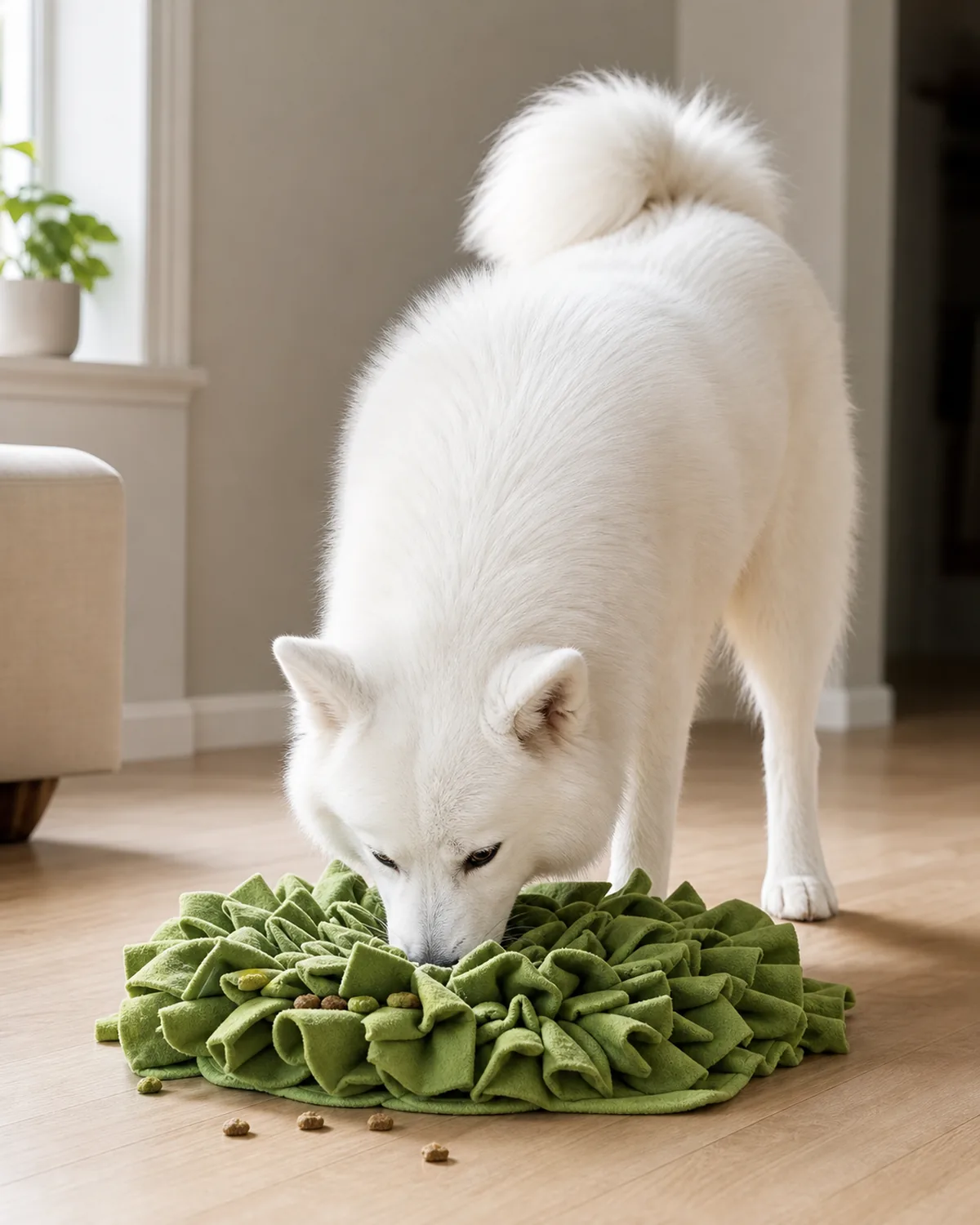
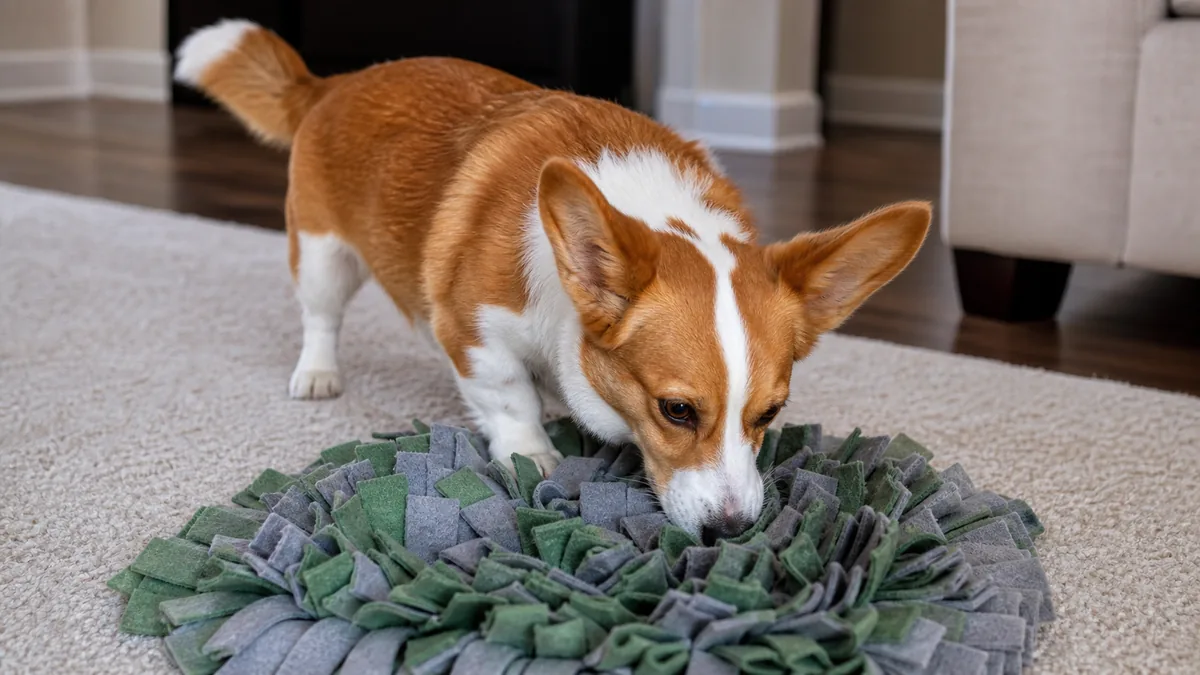
Scatter feeding is the lowest-effort enrichment that exists. Toss a portion of dinner into a snuffle mat, a folded towel, or a cardboard box full of crumpled paper, and let the nose do the work. A handful of kibble becomes a ten-minute hunt with no setup beyond what you already have.
This drains mental energy faster than almost anything else you can arrange at home. Olfaction is a dog’s dominant sense, wired to far more of the brain than sight. Asking the nose to work hard is asking the whole animal to concentrate, and that concentration is exhausting in the best way.
Rotate the surface to keep it fresh. A snuffle mat one day, a scatter across a towel the next, crumpled paper in a box after that. The act of searching stays the same, but the slight novelty keeps the dog from going on autopilot and rushing the hunt.
DIY Enrichment From Stuff You Already Own
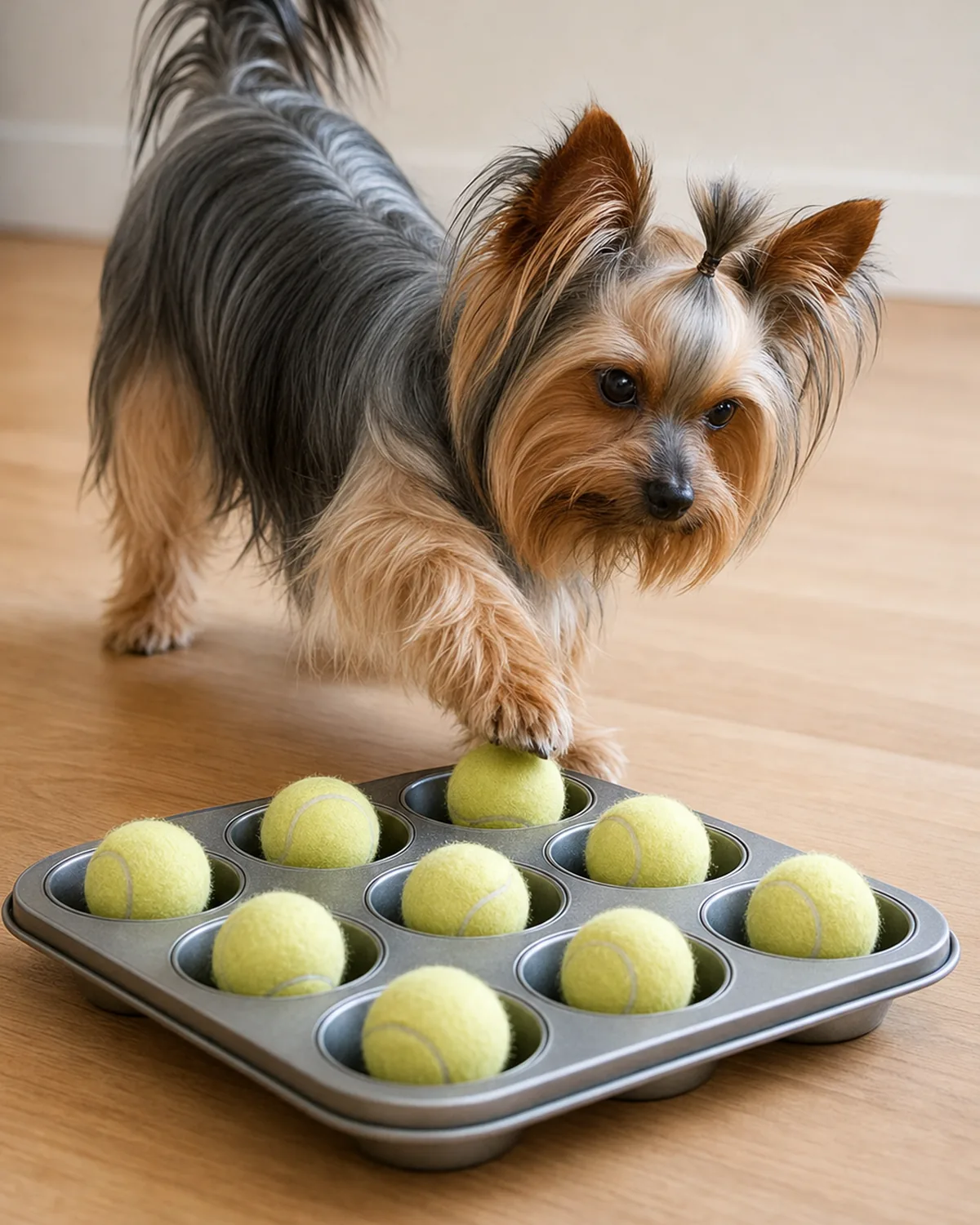
You do not need to buy anything to enrich a dog. A muffin tin with treats hidden under tennis balls in the cups, a cardboard box stuffed with paper and kibble, a towel rolled up with treats inside, a frozen dab of food in an empty yogurt cup — all of it delivers the same brain work as store-bought puzzles.
What matters is the combination of novelty and foraging, not the price tag. The dog cannot tell a forty-dollar puzzle from a muffin tin if both ask it to problem-solve for food. Household objects close the gap at near-zero cost, which means you can rotate through them freely without guilt.
One caution comes with the destruction-based games. Cardboard, paper, and yogurt cups are meant to be ripped apart, and a determined dog will swallow what it tears. Supervise these sessions and clear the debris once the dog reaches the food, so a fun hunt does not turn into a vet visit.
Teaching New Tricks as Brain Work (Not Just Party Tricks)
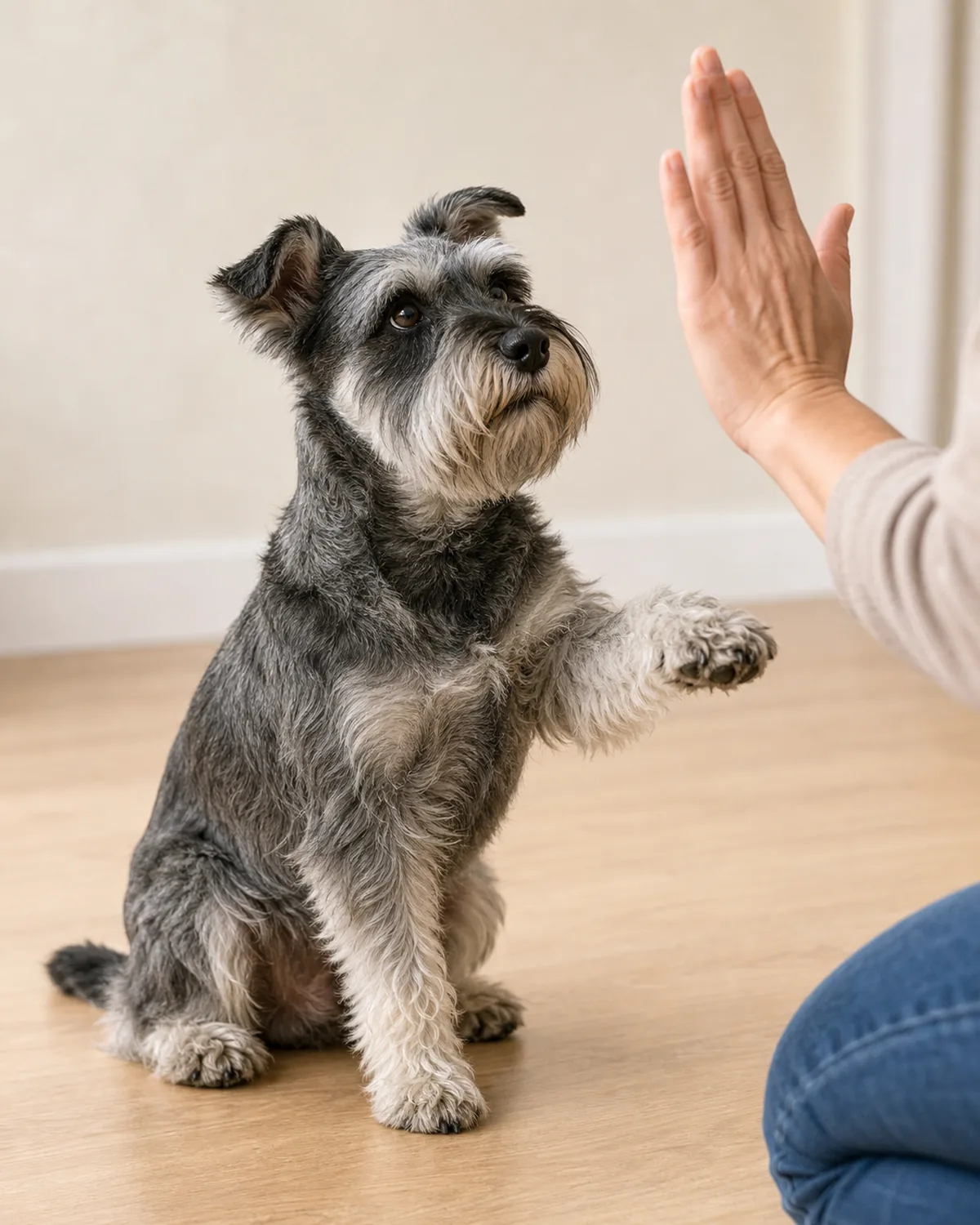
A trick session is mental exercise disguised as fun. Spend five minutes teaching spin, touch, place, or “find it,” and the value is not the finished trick at all. It is the figuring-out — the dog working through what earns the marker is genuine problem-solving, and problem-solving is what tires the brain.
Keep the sessions short and deliberate. Five minutes is plenty, especially early on. A dog that has just cracked something new is reliably calmer afterward, the way a person is settled after a satisfying stretch of focused work rather than wired up.
End on a win. Stop while the dog is still succeeding and still keen, not after it has started making mistakes from fatigue. A session that ends on a clean rep leaves the dog wanting the next one, which makes trick training something it volunteers for rather than tolerates.
Indoor enrichment is simple to set up, but a few quiet mistakes turn it from a calming tool into a frustrating or fattening one. Read all five rules before you scatter a single piece of kibble — they are what separate a dog who settles from a dog who quits.
-
1
Make your dog work for food — forage, don’t free-pour the bowl.Foraging for food is hardwired and self-rewarding, so the hunting itself becomes the payoff. A puzzle feeder, a snuffle mat, or a scatter-fed meal turns a thirty-second gulp into ten minutes of real brain work — far more tiring than the same food dumped in a bowl.
-
2
Calibrate the difficulty — too hard frustrates, too easy bores.Enrichment that’s above your dog’s level makes him quit; enrichment that’s beneath it doesn’t engage him at all. Start easy with visible, loose pieces and ladder the difficulty up as he solves each level, watching his actual behavior rather than the box’s recommended age.
-
3
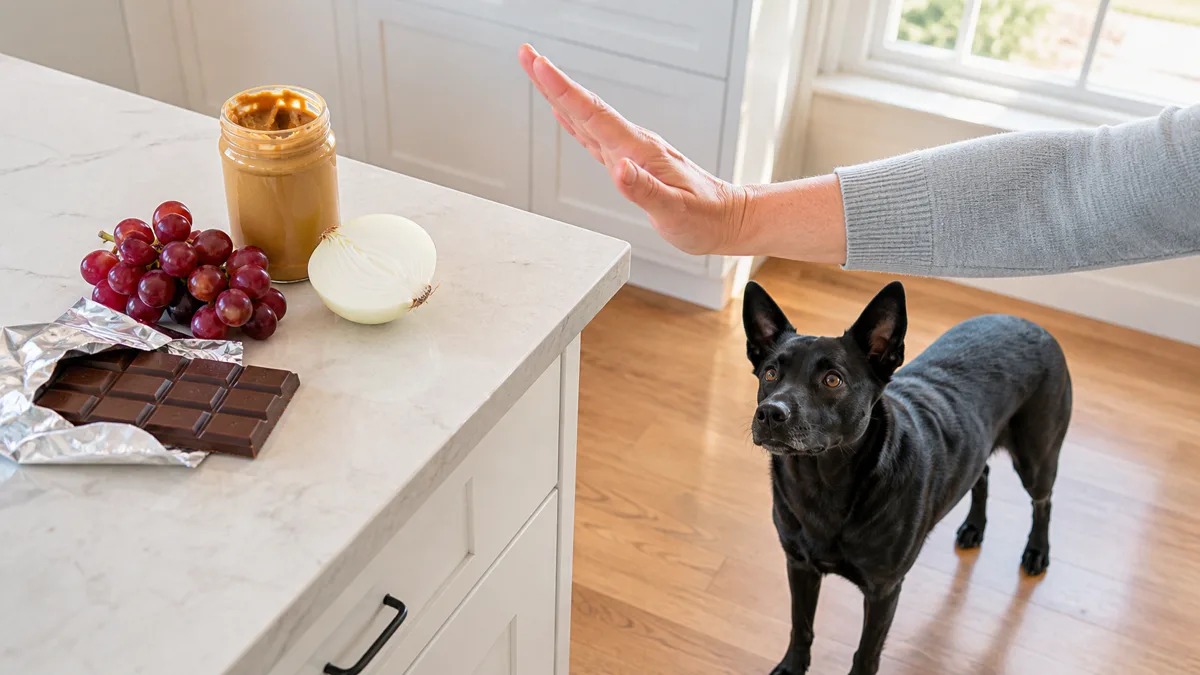
Subtract enrichment calories from the daily ration — don’t stack them on top.Every treat in a puzzle and every handful in a snuffle mat is food. Counting enrichment on top of full meals quietly drives weight gain over weeks. Measure the day’s ration first, then set part of it aside for puzzles and foraging instead of adding extra.
-
4
End most enrichment in calm — skip high-arousal games before you need a settle.Sustained chewing, licking, and sniffing lower arousal and leave a dog satisfied. Tug, chase, and wrestling do the opposite. If you need your dog to settle for a meeting or bedtime, reach for a frozen toy or a chew, not a wild game that winds him up right before he has to switch off.
-
5
Rotate toys for novelty — and supervise any destruction-based game.Keep most toys out of sight and put out only a few, swapping the set every week or so; novelty bias makes an old toy fascinating again. With cardboard, paper, and stuffed puzzles, stay in the room — the brain work is the goal, not a swallowed mouthful of box.
Chew-Based Enrichment: The Calming Power of a Long Chew
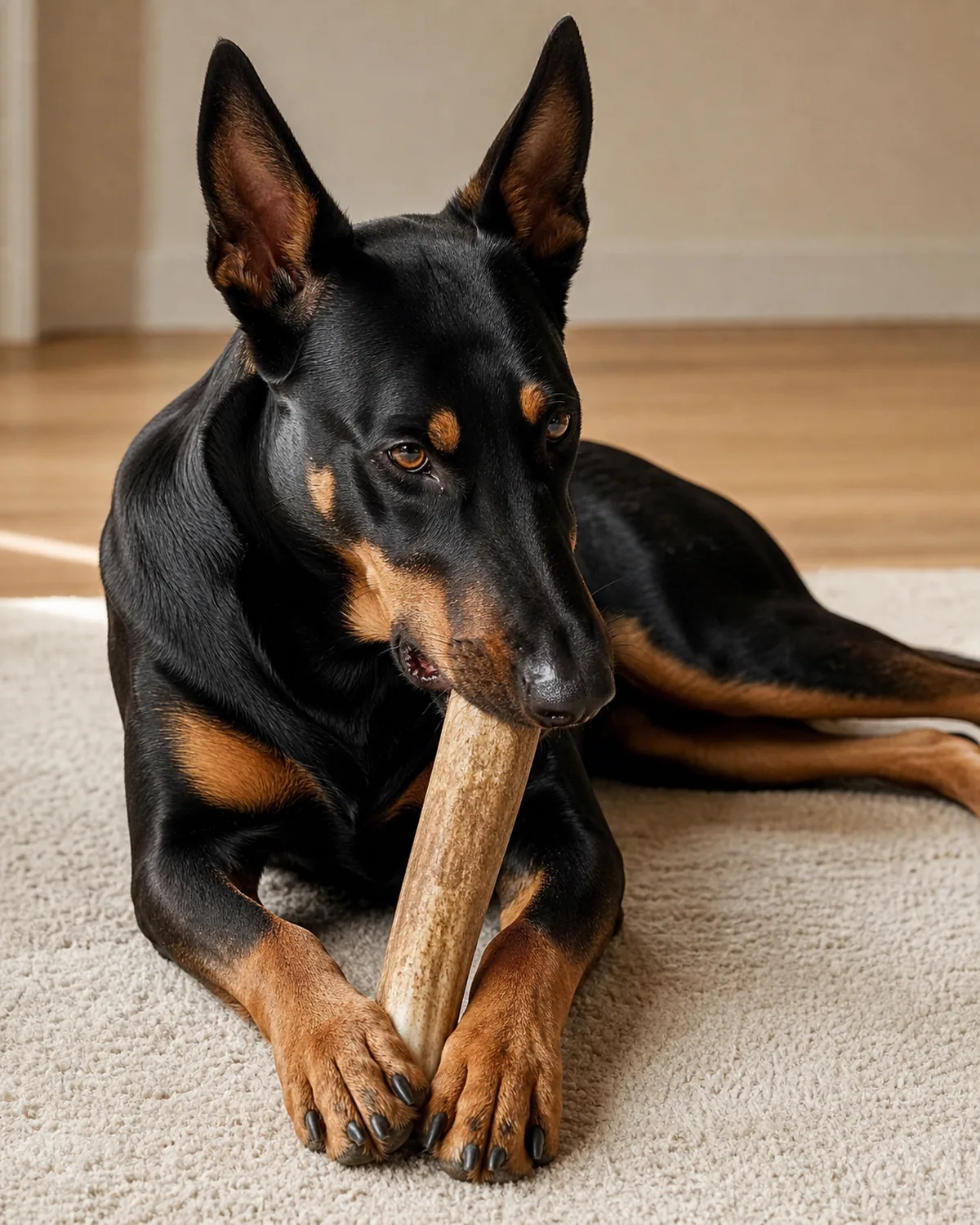
A long, appropriate chew is one of the few activities that actively lowers a dog’s arousal rather than raising it. Sustained chewing and licking release calming endorphins, which is exactly why a good chew settles a wound-up dog better than another round of fetch ever could.
The selection matters more than people realize. Choose a chew sized for your dog, hard enough to last but not so hard it risks a cracked tooth — skip anything harder than a kneecap. Avoid anything small enough to swallow whole, and lean toward digestible options so a gulped end does not cause a blockage.
Used well, a chew gives the dog a job to settle into during a stretch when you need quiet. The methodical work occupies the mouth and the mind at once, which is why a chew during a phone call or a meeting buys you genuine, calm downtime instead of a restless dog pestering for attention.
Rotate, Don’t Pile: The Toy Rotation System
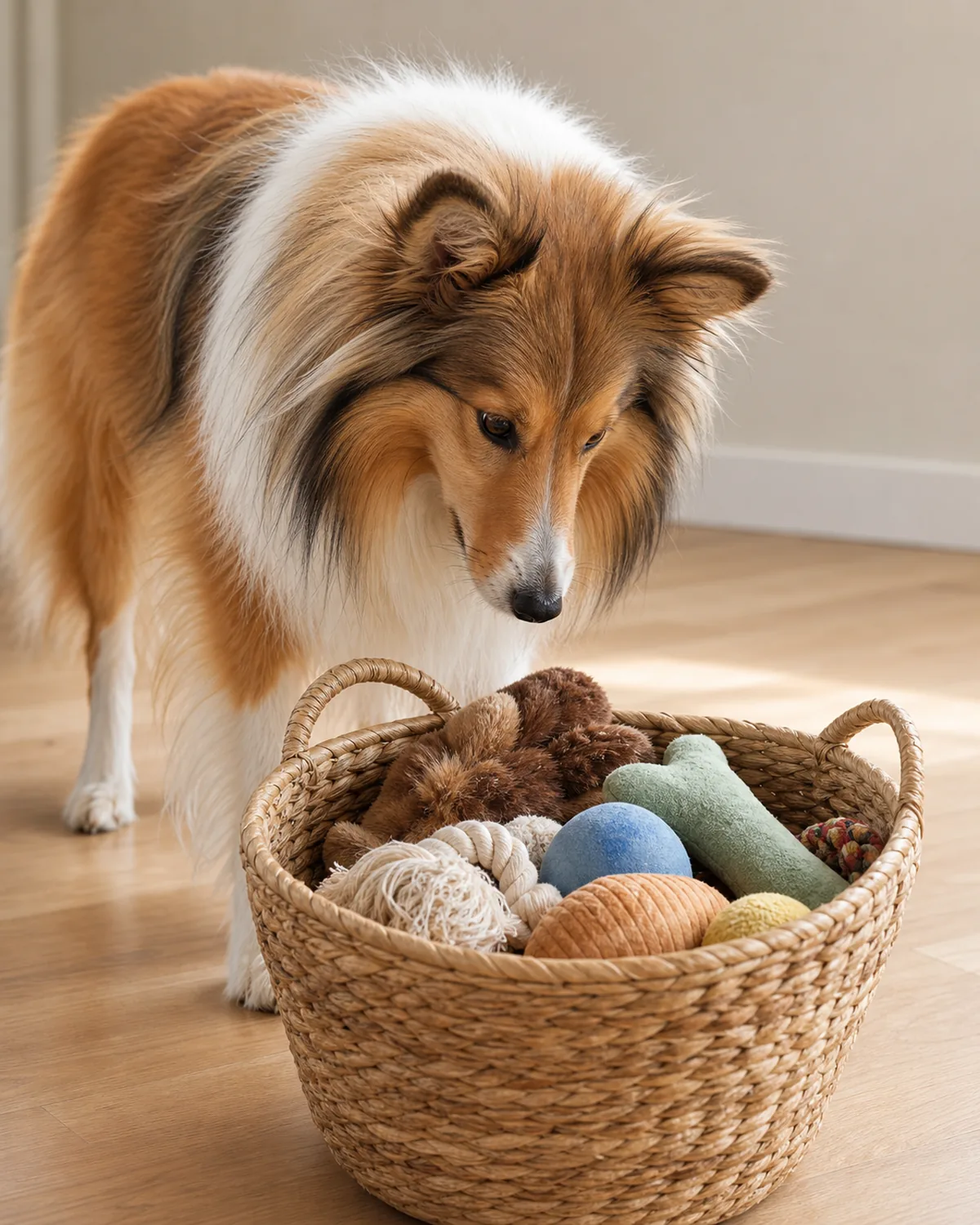
A toy box overflowing with options is a toy box full of ignored toys. Dogs habituate fast: a toy that is always available stops being interesting. The fix costs nothing — store most of the toys out of sight and put out only a few at a time.
Swap the set every week or so. Novelty bias means a toy your dog walked past for a month becomes fascinating again after two weeks tucked in a closet. You are manufacturing “new” toys for free, over and over, from the same pile you already own.
The result is higher engagement from the toys themselves, with no extra spending. Keep three or four out, rotate the rest through, and the same dozen toys feel like a steady supply of novelty rather than a stale heap the dog has learned to overlook.
Frozen and Stuffed Toys for Long Settles
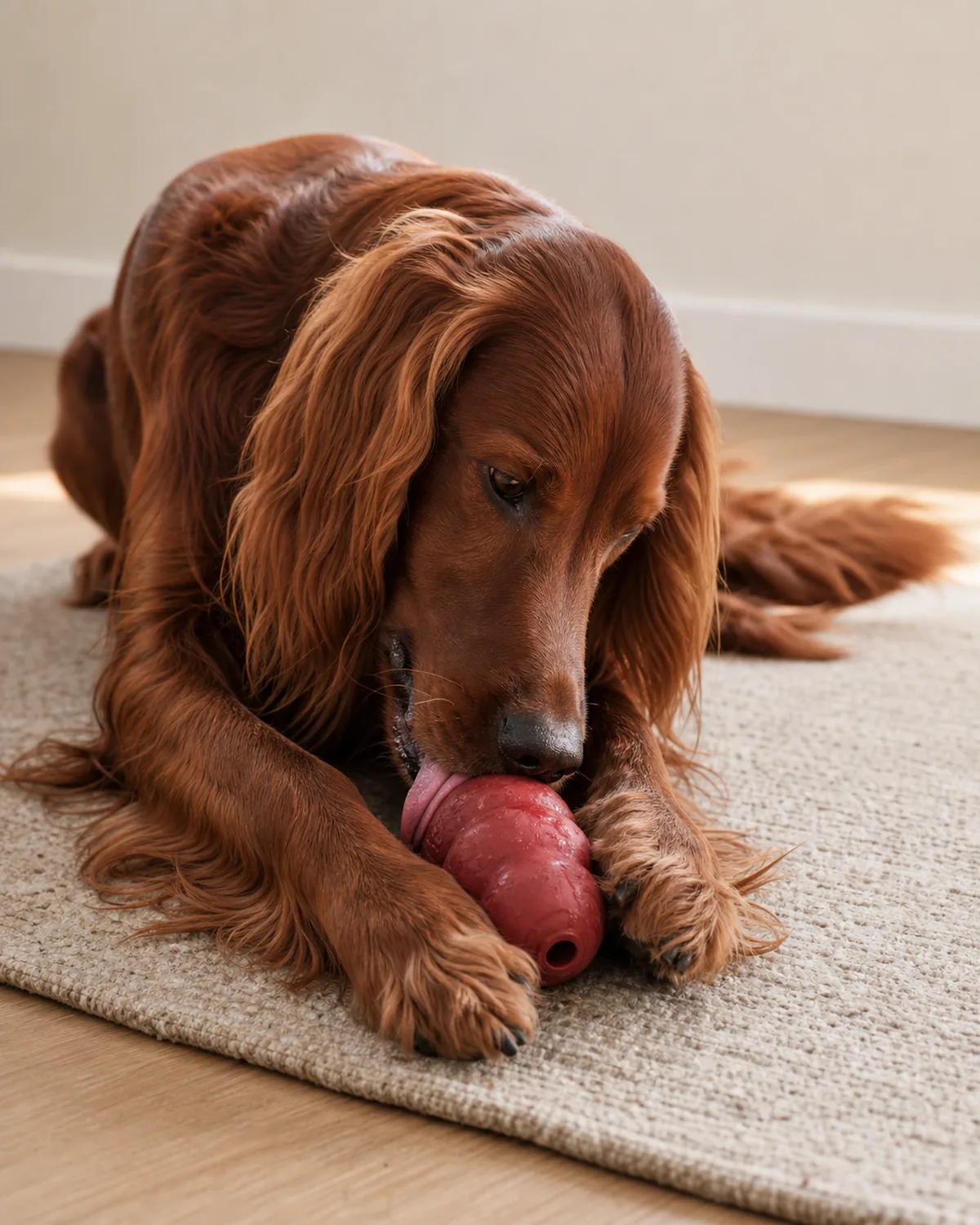
Freezing turns a five-minute snack into a thirty-minute project. Pack a rubber toy with wet food, mashed banana, or soaked kibble, freeze it solid, and hand it over. The frozen version lasts far longer than the same food at room temperature, because the dog has to work patiently to get any of it out.
The slowing-down is the whole benefit. The long, methodical licking that frozen food forces is both mentally absorbing and physiologically calming — the same endorphin effect as a long chew, stretched across half an hour. It is one of the most reliable ways to occupy a dog without supervising every second.
This makes frozen toys ideal for moments you need a guaranteed long settle. Crate time, a busy work-from-home afternoon, a stretch where you cannot actively engage — a frozen stuffed toy fills it with quiet, satisfying work. Prep a few in advance and keep them in the freezer so one is always ready.
Indoor Enrichment Quick Checklist
Work a few of these into the day — a foraging breakfast, a chew during meetings, a snuffle hunt before dinner — and the boredom behaviors fade on their own.
- Serve a meal in a food puzzle or slow feeder instead of the bowl.
- Scatter-feed one meal in a snuffle mat, towel, or box of crumpled paper.
- Build a quick DIY game — muffin tin with treats under tennis balls, or a stuffed cardboard box.
- Teach or practice one trick in a short 5-minute session and end on a win.
- Offer one size-appropriate, digestible long chew for calm downtime.
- Rotate the toy set — store most out of sight and swap a few in each week.
- Freeze a stuffed rubber toy for a long settle during crate time or work calls.
- Stay in the room and supervise any chewing or destruction-based foraging game.
Puppies and seniors: drop the difficulty — loose-piece puzzles, shorter sessions, and gentle scent games over hard problem-solving. Keep enrichment treats inside the daily ration so it doesn’t add weight.
PAWLIQA · DOG CARE
Building a Rainy-Day Indoor Routine

Individual activities help, but a structure helps more. String the pieces into a loose schedule across the day: a foraging breakfast, a mid-morning trick session, a chew during your meetings, a snuffle hunt before dinner, and real rest in the gaps between.
Predictable enrichment spaced through the day keeps a dog’s arousal low and even. The boredom spikes that produce destructive bursts tend to hit when a dog has gone hours with nothing, then suddenly has too much energy and no outlet. Spacing the activities out heads those spikes off before they build.
The rest between matters as much as the activities. Enrichment is not about cramming every hour full — it is about giving the day a rhythm of work and downtime. A dog that knows another job is coming settles into the quiet stretches instead of agitating through them, which is the point of a routine on a rainy day stuck inside.
Enrichment by Energy Level and Age
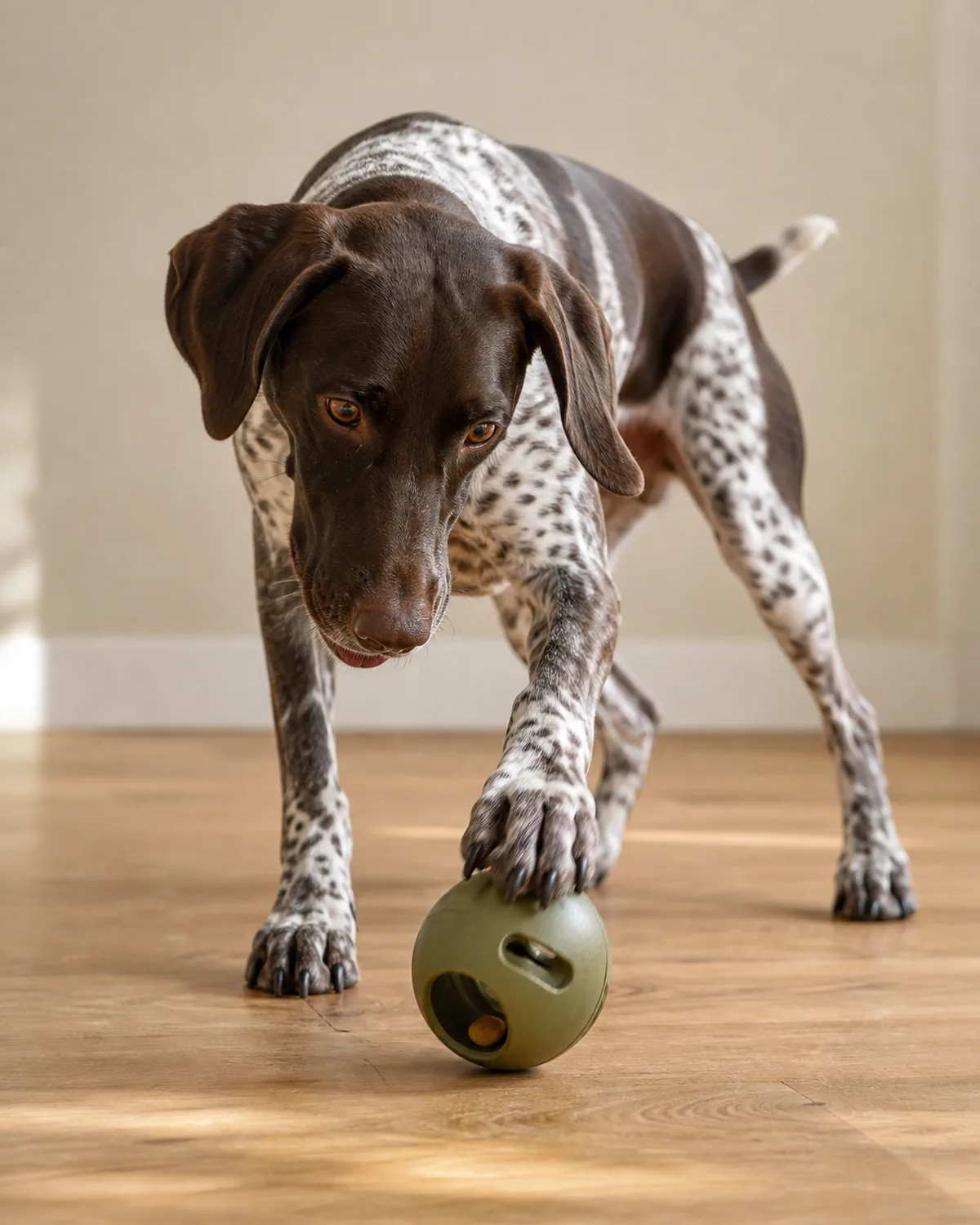
The same activity that exhausts one dog bores another. Match the difficulty to the individual. A high-drive dog needs harder puzzles and longer hunts to feel the work; the easy version it solves in thirty seconds barely registers and leaves it looking for more.
Puppies and seniors sit at the other end. A puppy needs easy wins and short sessions — frustration sours the whole experience and its focus runs out fast. A senior often does best with scent work and gentle problem-solving over anything physical, keeping the brain busy without taxing aging joints.
The principle underneath is calibration. Enrichment that is too easy bores the dog, and enrichment that is too hard frustrates it into quitting. Tuning the challenge to the dog in front of you is what makes the activity genuinely tiring rather than dull or annoying. Watch how your dog engages and adjust until it stays absorbed but still succeeds.
The 3 Enrichment Mistakes That Backfire
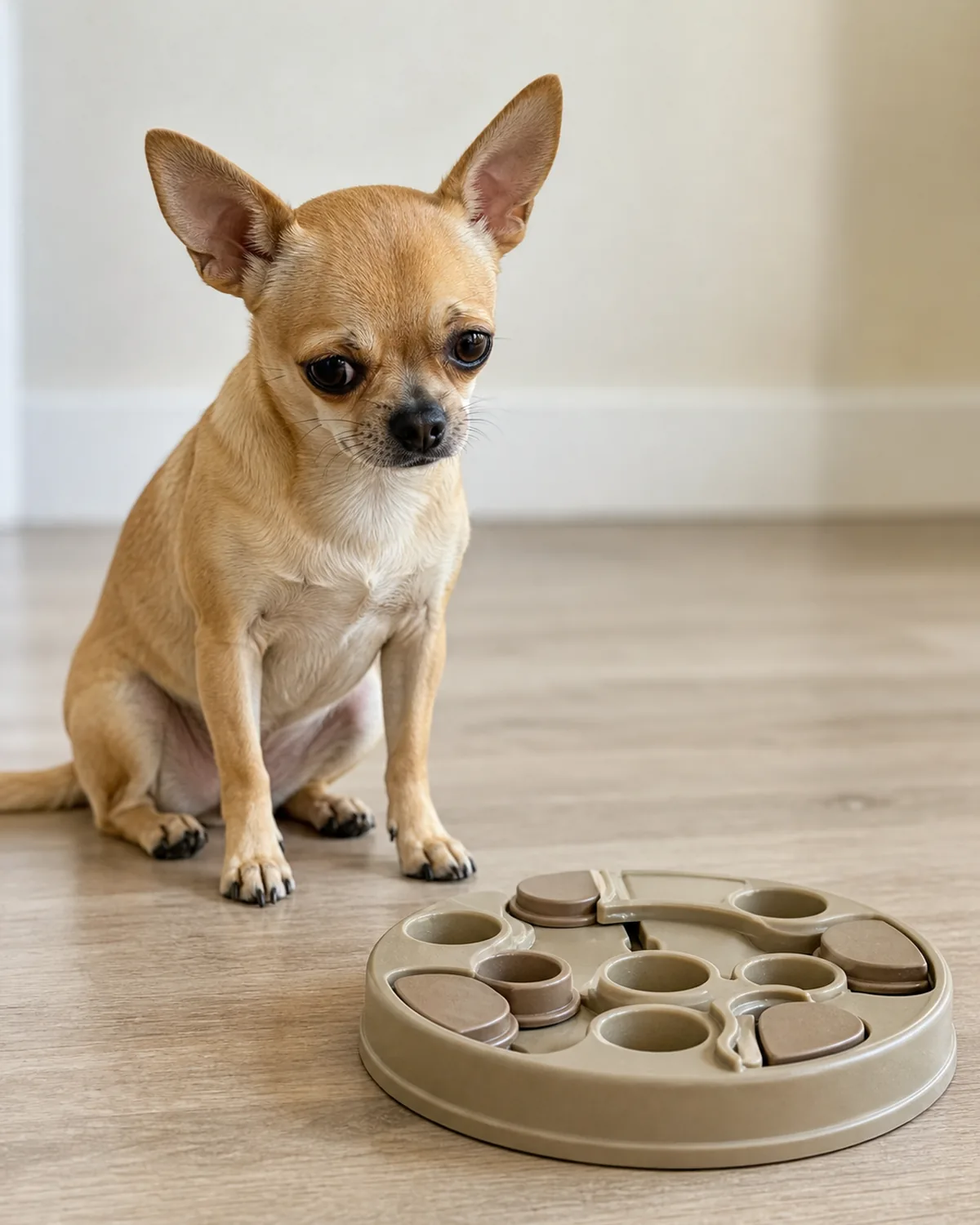
Enrichment can backfire when it is set up wrong. Three mistakes show up again and again, and each one quietly undoes the benefit you were after.
Mistake 1: Making the Puzzle Too Hard, Too Fast
A puzzle far beyond a dog’s current level does not build persistence — it teaches the dog to quit. Faced with a problem it cannot crack, the dog walks away frustrated and is slower to try the next one. Start easy and ladder the difficulty up only as the dog earns it.
Mistake 2: Adding Enrichment Food on Top of Full Meals
Every treat in a puzzle and every scatter of kibble is calories. Pile enrichment food on top of full meals and you are quietly driving weight gain over weeks. Subtract the enrichment calories from the daily ration — measure the day’s food and use part of it for the puzzles rather than adding extra.
Mistake 3: High-Arousal Games Right Before You Need Calm
Tug, chase, and wrestling wind a dog up, not down. Run a high-arousal game right before you need the dog to settle and you have done the opposite of what you intended. Enrichment meant to calm should lean on foraging, chewing, and licking — and the day should usually end on something quiet, not a frantic dog.
When Boredom Is Actually Anxiety: Knowing the Difference
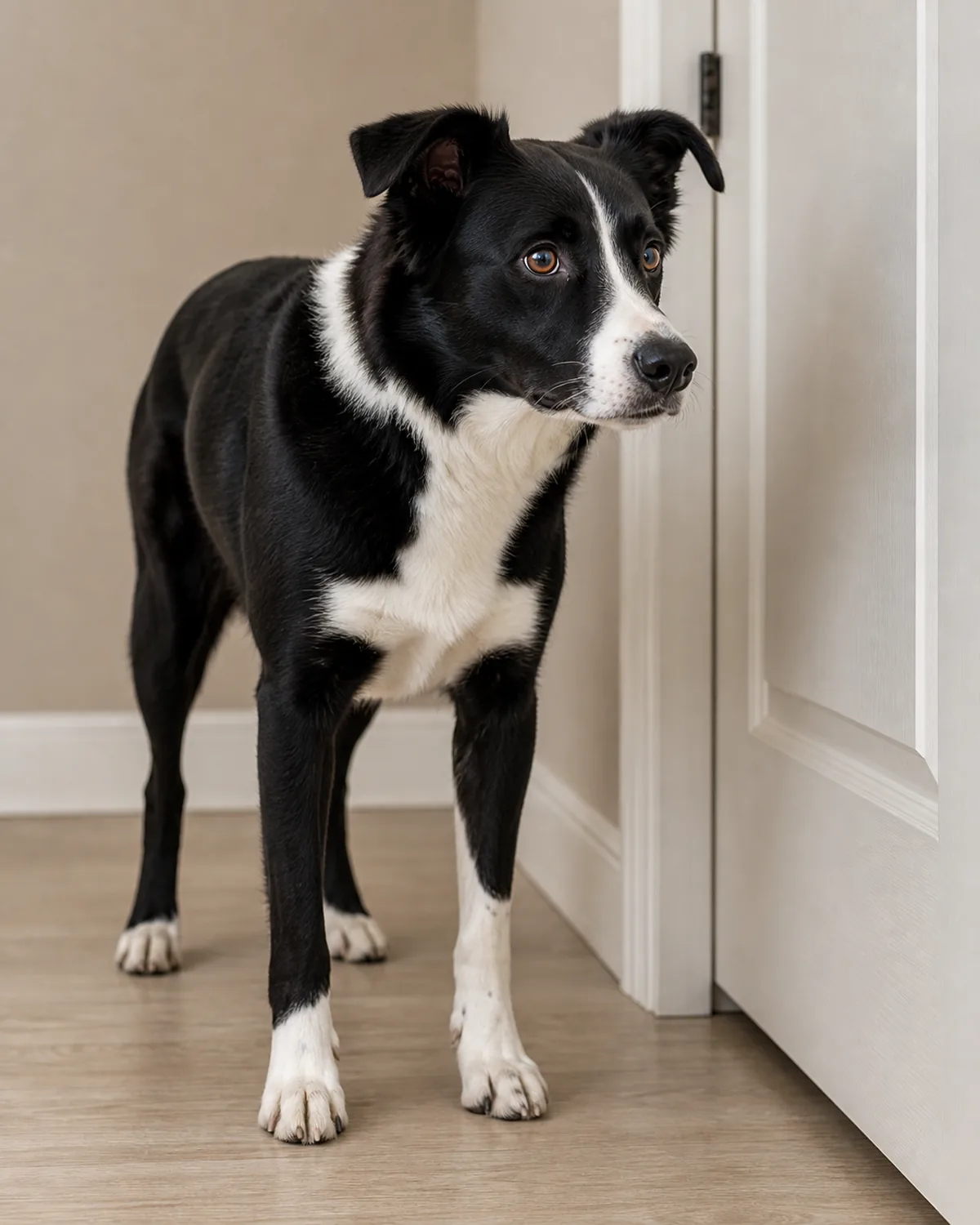
Boredom destruction and separation anxiety can look identical from the outside, but they have different drivers — and enrichment only fixes one of them. Telling them apart matters, because aiming more puzzles at the wrong problem wastes time the dog does not have.
What Boredom Looks Like
Boredom destruction happens when a dog is under-occupied but otherwise relaxed. It chews, digs, or shreds because nothing better is on offer, and it stops the moment you provide a real job. Give a bored dog a snuffle hunt or a stuffed toy and the destruction ends right there.
What Separation Distress Looks Like
Separation-related distress shows up only when the dog is left alone. The signs are different: pacing, drooling, vocalizing, or destruction focused specifically on exits — the door, the window, the crate latch. A well-enriched dog that still falls apart the moment it is alone is telling you something enrichment cannot answer.
When to Get Help
Enrichment helps boredom but will not resolve true separation anxiety, because the two have different roots. If your dog only destructs when alone despite plenty of daytime enrichment, that pattern warrants a vet or a certified behaviorist rather than another puzzle. Treating anxiety as boredom leaves the real problem untouched.
— Jess Calloway shares her home with three dogs of very different energy levels, and every enrichment idea here was tested on the high-drive one, the lazy one, and the puppy in between before it made the list.
Jess is a dog mom of three — including one high-drive dog who used to redecorate the living room on rainy days and busy work-from-home afternoons, until she learned that a worked brain is a tired brain. Enrichment, not a second walk, is what keeps her household calm: foraging meals, snuffle hunts, and frozen toys do what physical exercise alone never quite managed. This guide covers food puzzles and slow feeders, snuffle mats and scatter feeding, DIY enrichment from things you already own, trick training as brain work, chew-based calming, the toy rotation system, frozen and stuffed toys for long settles, a rainy-day indoor routine, matching enrichment to energy and age, and telling boredom apart from anxiety. Pawliqa is not a substitute for professional behavior help — if your dog only destroys things when left alone, that pattern may be separation anxiety rather than boredom, so consult your vet or a certified applied animal behaviorist before relying on enrichment alone. Visit the About page.