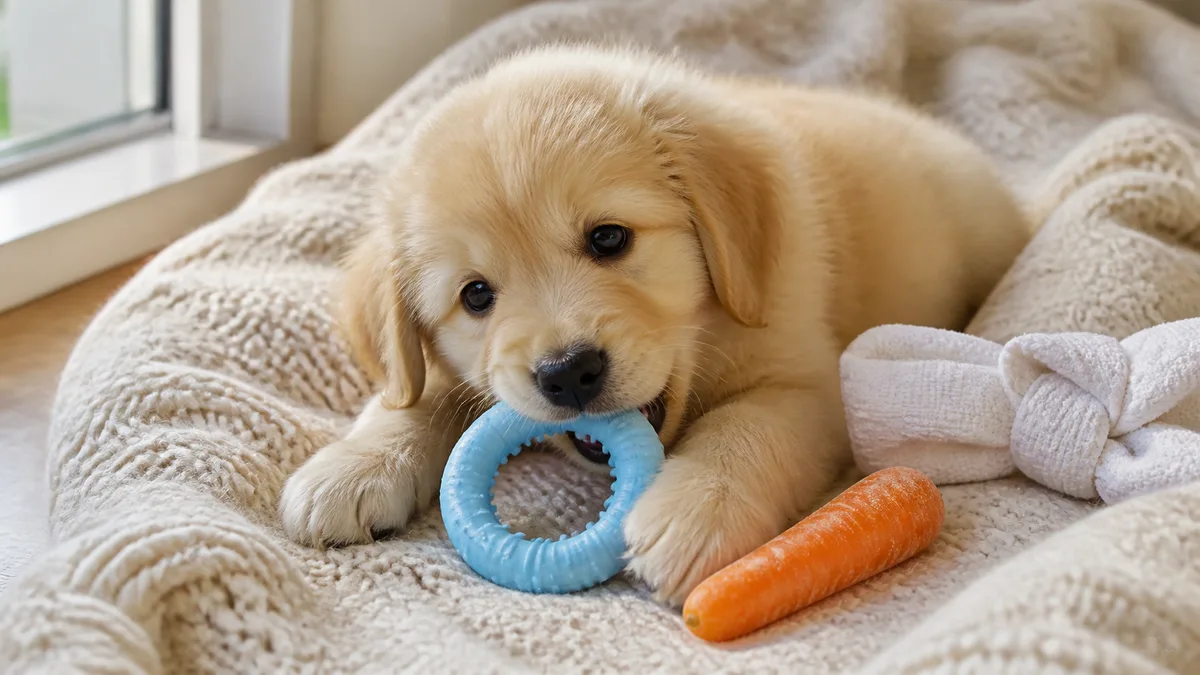
Puppy Teething Relief
Sixteen vet-approved puppy teething relief ideas, from frozen washcloths and chilled carrots to safe chew toys and gum-soothing routines that actually calm a teething puppy.
Read the guide
My first puppy slept eighteen hours a day and I spent the other six panicking that something was wrong with her. Nobody told me that was normal.
Puppies do not come with a manual for their sleep schedule, but they do come with patterns you can learn to read. Once you see what is normal and how to set things up, the whole first year gets easier.
Here are sixteen things about puppy sleep that I wish someone had told me before I brought my first one home.
From how many hours puppies actually need to when the midnight potty trips finally stop, these sixteen facts cover every stage of your puppy sleep schedule. Jump to whichever one you need right now.
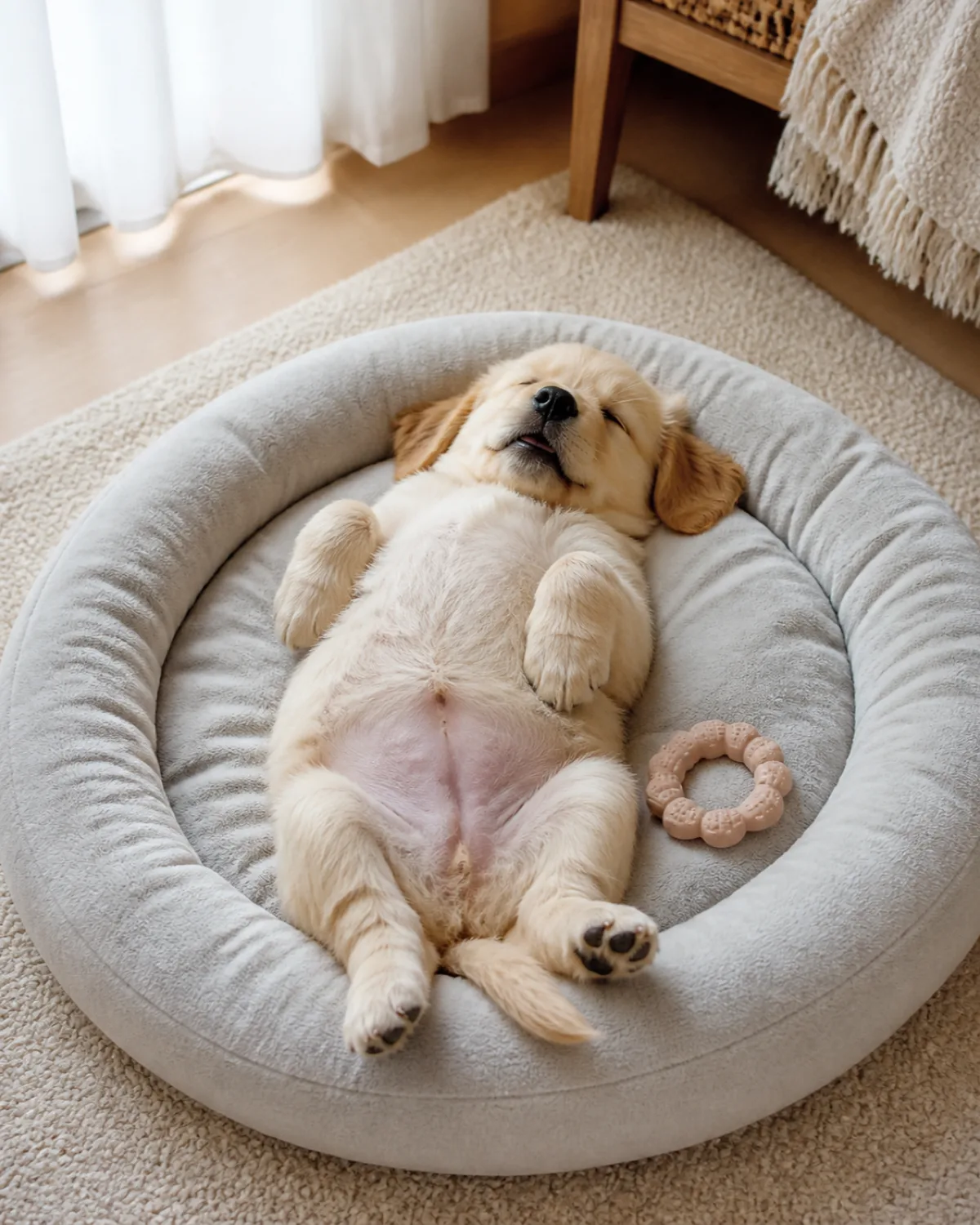
A puppy between eight and ten weeks old sleeps eighteen to twenty hours out of every twenty-four. That sounds excessive until you realize what is happening inside that sleeping body — bones are lengthening, muscles are forming, and the nervous system is building connections faster than at any other point in the dog's life.
Adult dogs settle into twelve to fourteen hours of sleep per day, which still sounds like a lot compared to humans. The difference is that dogs sleep in shorter bursts rather than one long stretch, so you see them awake more often than the numbers suggest.
The single most common mistake new puppy owners make is waking a sleeping puppy to play with it. Resist that urge. A sleeping puppy is a growing puppy, and interrupting deep sleep slows down the development you want to happen.
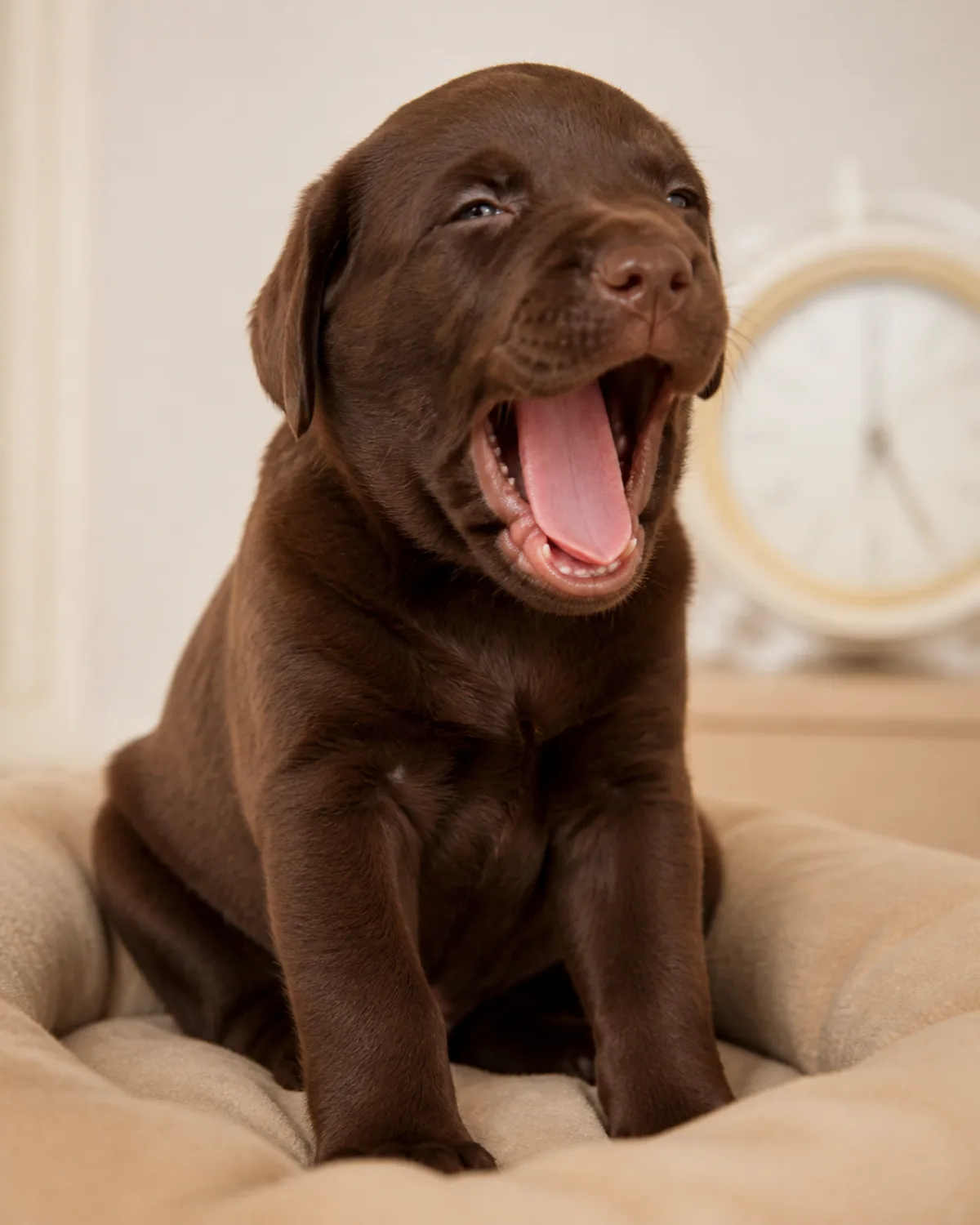
Your puppy's sleep needs drop in a predictable pattern. At eight to twelve weeks, expect eighteen to twenty hours. From three to six months, that drops to fifteen to eighteen hours. Between six months and a year, it settles to fourteen to sixteen hours. After the first birthday, twelve to fourteen hours becomes the norm.
The shift matters more than the exact numbers. Watch for behavioral signals instead of counting hours. A puppy that starts yawning mid-play, chewing harder on everything nearby, or staring blankly at nothing is telling you it needs sleep regardless of what the clock says.
Giant breeds tend to sleep more and mature slower, so their schedule may lag behind these ranges by a few weeks at each stage. Small breeds often seem to have endless energy but actually need just as much sleep — they just crash harder and faster when they finally stop.
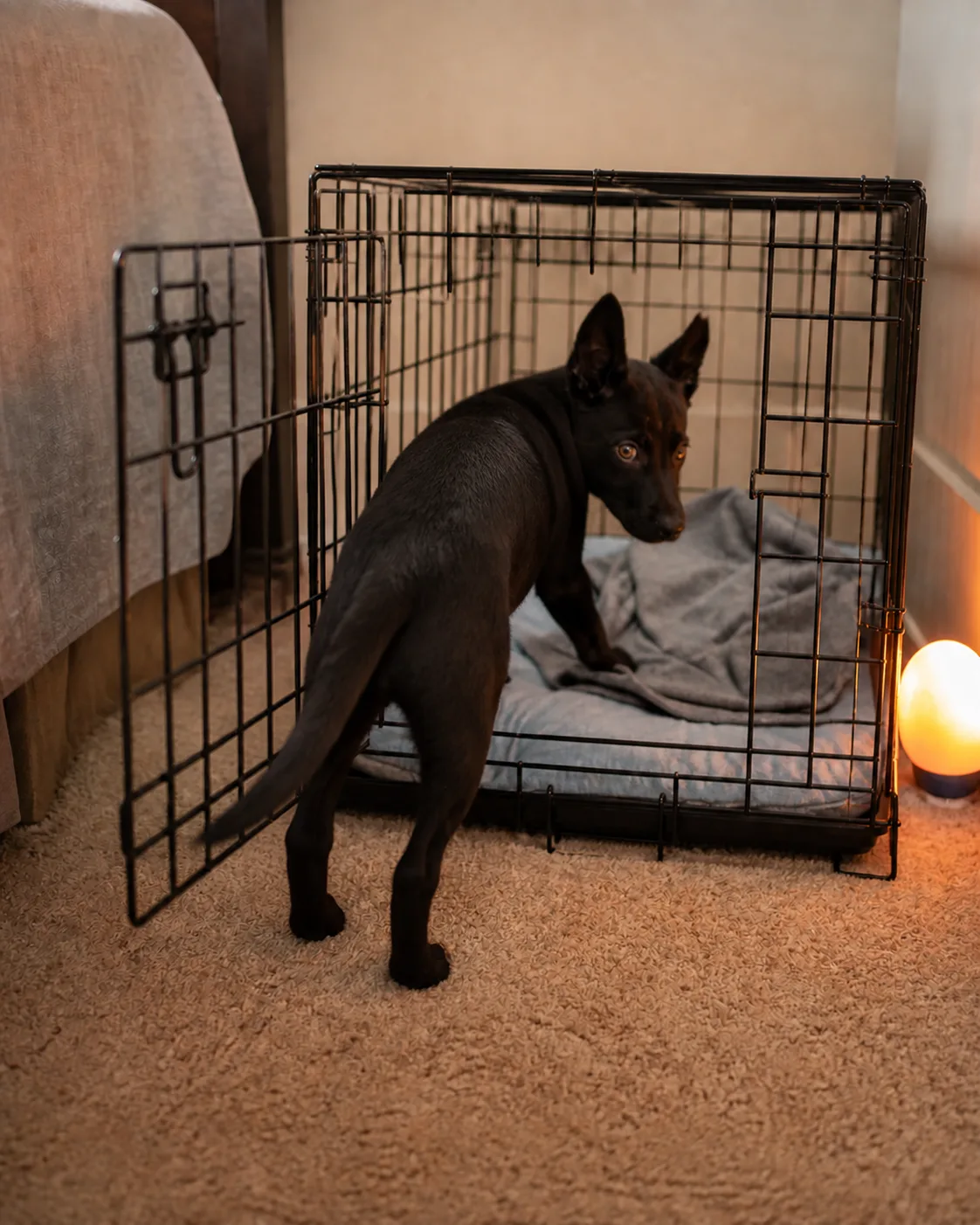
Your puppy needs one place that always means sleep. A crate with a comfortable pad, a pen with a blanket, or a quiet corner with a dedicated bed — pick one and do not change it for at least the first month.
The reason is association. When your puppy goes to that spot and only that spot for sleep, it learns to power down automatically when it arrives there. That association is more powerful than any command or routine because it works passively, without you doing anything.
Place the sleep spot somewhere quiet but not isolated. A corner of the bedroom or the calm end of the living room works. Avoid high-traffic areas like the kitchen or hallway where footsteps and movement will wake a light-sleeping puppy every twenty minutes.
Do not let your puppy sleep randomly on the couch, your bed, or the floor during the first month. After the habit is locked in and your puppy goes to its spot by choice, you can relax the rule. Our full guide on how to crate train a puppy walks through the introduction process step by step.
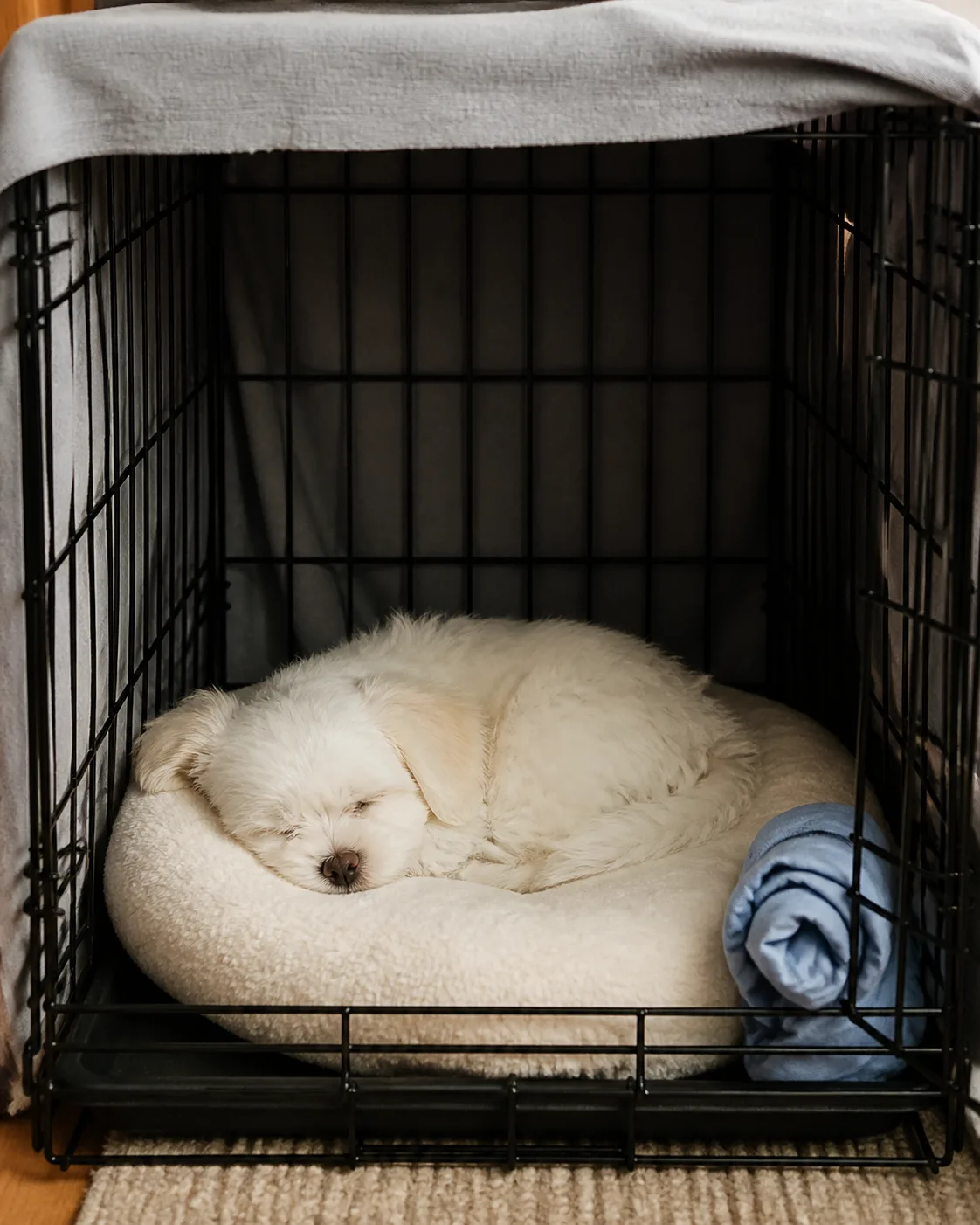
A crate simulates the den instinct that dogs carry from their wolf ancestors. A space just big enough to stand, turn around, and lie down triggers a sense of security that an open room cannot replicate.
Cover three sides with a light blanket to block visual stimulation and darken the interior. Leave the front partially open so air circulates. Place an old shirt you have worn inside — your scent calms a puppy more effectively than any commercial calming spray.
The crate is never punishment. If a puppy only goes in the crate when it has done something wrong, it will fight going in at bedtime. The crate should mean rest, treats, and safety.
Toss a small treat inside every time your puppy walks in voluntarily during the day so it builds a positive bank of experiences. For the full step-by-step introduction process, see our guide on how to crate train a puppy.
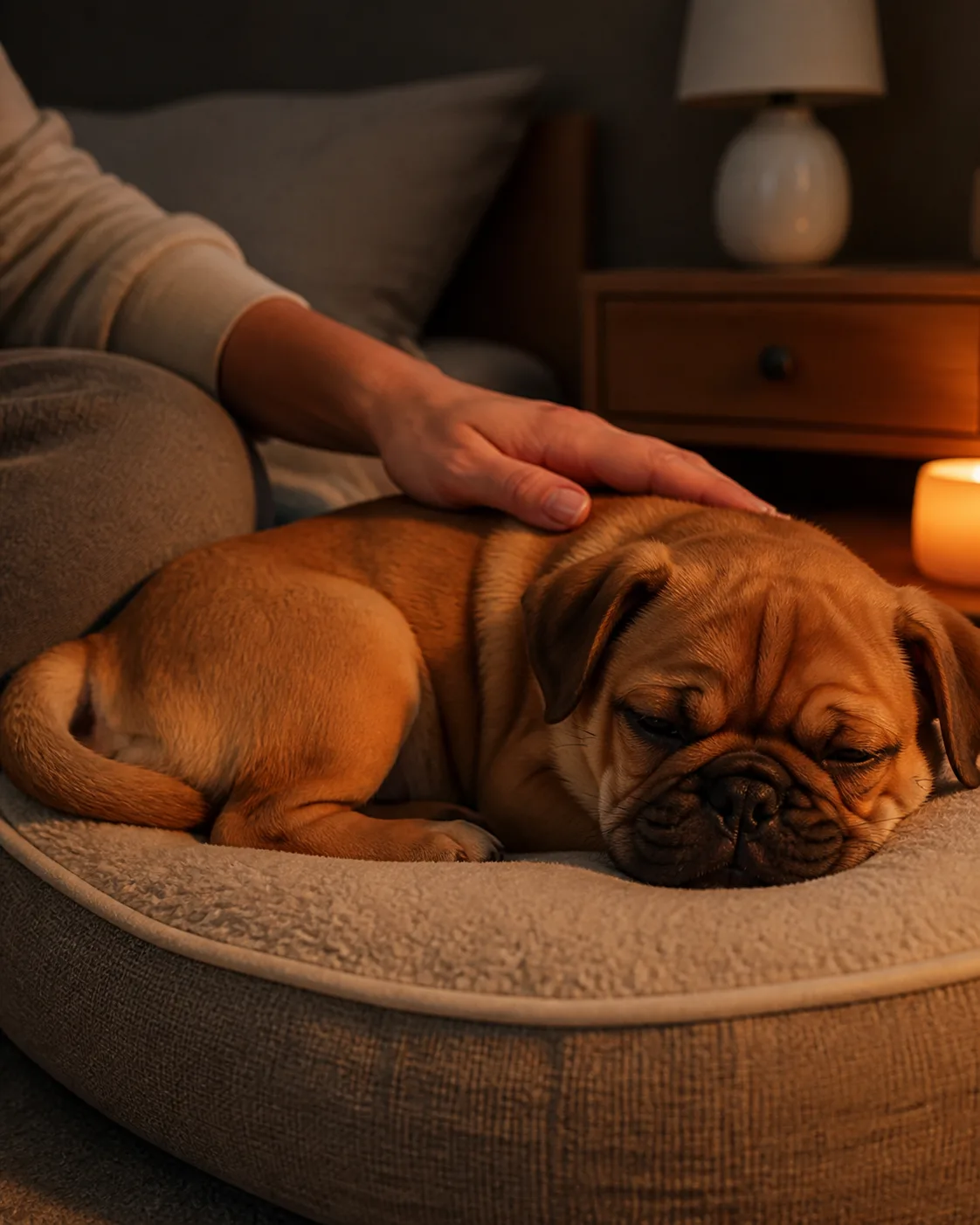
Puppies cannot read clocks, but they can read patterns. A bedtime routine is a sequence of events that tells your puppy sleep is coming before you say a single word.
Start at the same time every night: last potty break outside, come back in, five minutes of quiet petting on the floor (not play), one small treat tossed into the crate, lights down, done. After two weeks of the same sequence, your puppy will start heading toward the crate before you even finish the petting.
The quiet petting matters more than people realize. It shifts your puppy's nervous system from active mode to rest mode. Vigorous play right before bed is like giving a toddler sugar — technically they will still sleep eventually, but you will both have a harder time getting there.
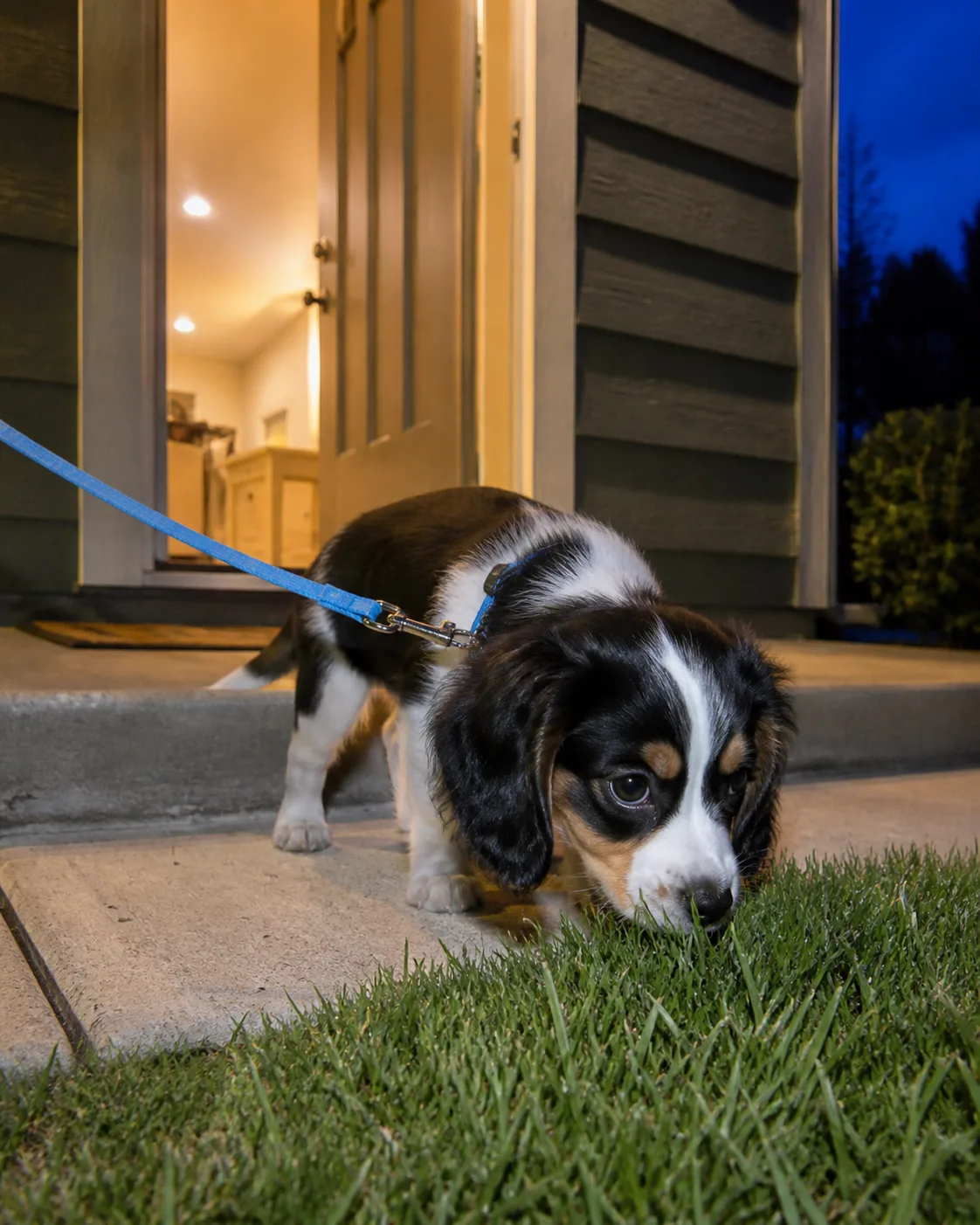
The timing of your puppy's last bathroom trip before bed determines whether you get four hours of uninterrupted sleep or two. An eight to ten week old puppy taken out at ten at night will likely need to go again by two in the morning. The same puppy taken out at eleven might make it to five or six.
A general rule: add thirty minutes of bladder capacity for every two weeks of age. At eight weeks, expect a three to four hour window overnight. By sixteen weeks, most puppies stretch to six hours. By six months, many can hold it through a full eight-hour night.
Water management helps. Pick up the water bowl about two hours before bedtime so your puppy's bladder is empty when it goes into the crate. This is not deprivation — it is timing. Make sure water is available freely all day so the evening cutoff does not cause thirst.
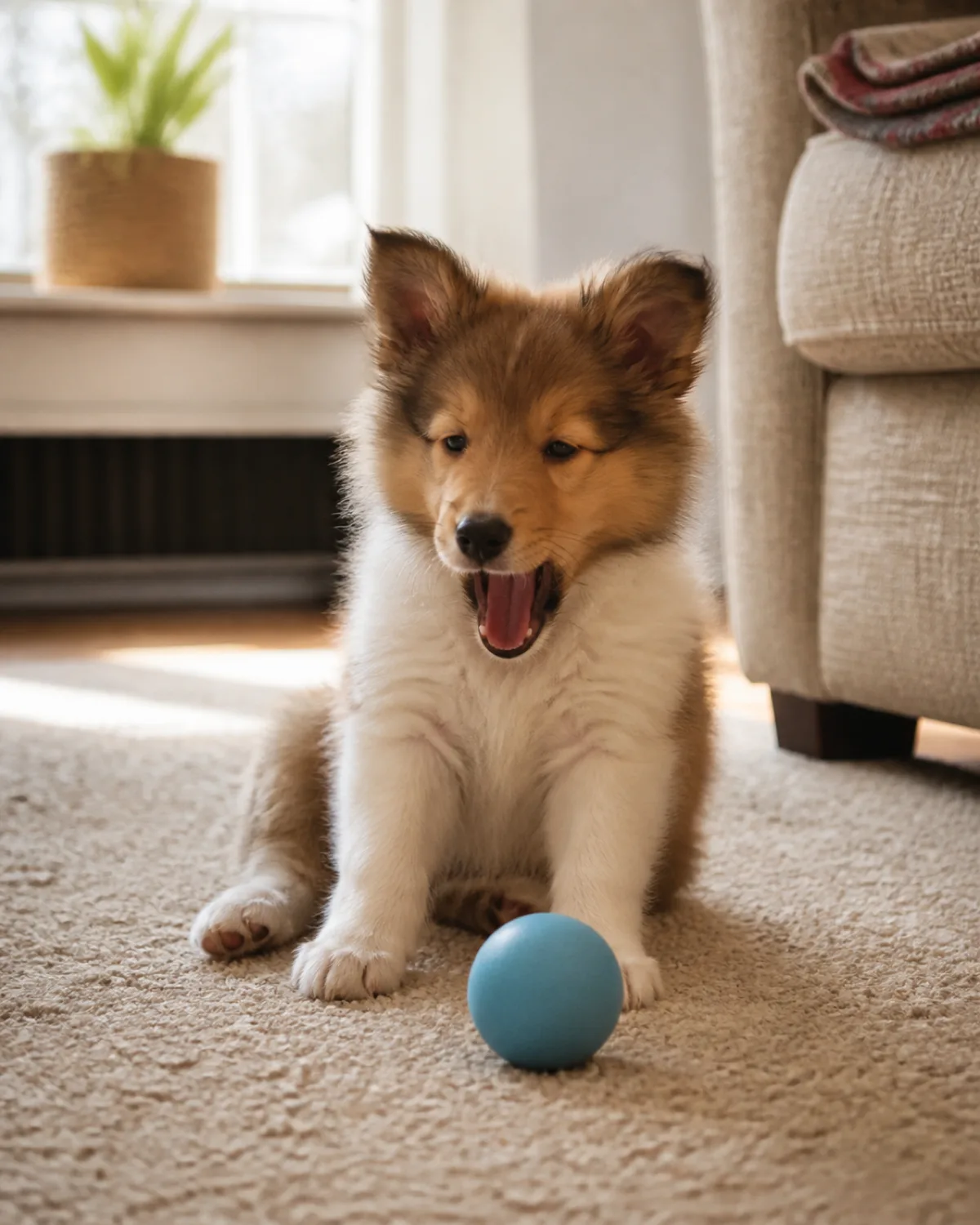
A puppy that skips naps does not become a well-exercised puppy. It becomes an overtired monster. The biting gets harder, the zoomies get wilder, the barking gets louder, and every piece of guidance you try to give bounces off a brain that has lost the ability to process anything.
Think of a toddler who missed a nap. Same energy, sharper teeth.
Most puppies need a nap after every one to two hours of awake time. That ratio seems extreme until you live it and discover that the puppy who napped at noon is a different animal than the one who powered through until two. The rested version listens. The tired version destroys.
Set a timer when your puppy wakes up from a nap. When that timer hits ninety minutes, start watching for sleepy signals. By two hours, guide the puppy to its sleep spot whether or not it looks tired — it probably is but has not realized it yet.

Overtiredness shows up in stages, and catching it early saves everyone grief. The first signals are subtle — yawning, slower movement, staring at nothing for a few seconds. These are the easy window. Pick up your puppy, walk it to the crate, and it will be asleep in minutes.
The second stage is harder to read because it looks like the puppy is having fun. Biting escalates from mouthing to actual clamping. Zoomies kick in but the eyes are glazed rather than bright. The puppy latches onto shoelaces, chair legs, or your pants and will not let go despite redirection.
The third stage is the meltdown. High-pitched barking, frantic running, snapping at things and then running away. At this point, the puppy is too wired to fall asleep on its own even though sleep is exactly what it needs. You will need to calmly place it in the crate, cover the crate, walk away, and wait.

Dog mom to three very different dogs. Every guide on Pawliqa is based on real experience, veterinary guidance, and way too many hours reading ingredient labels. More about Jess
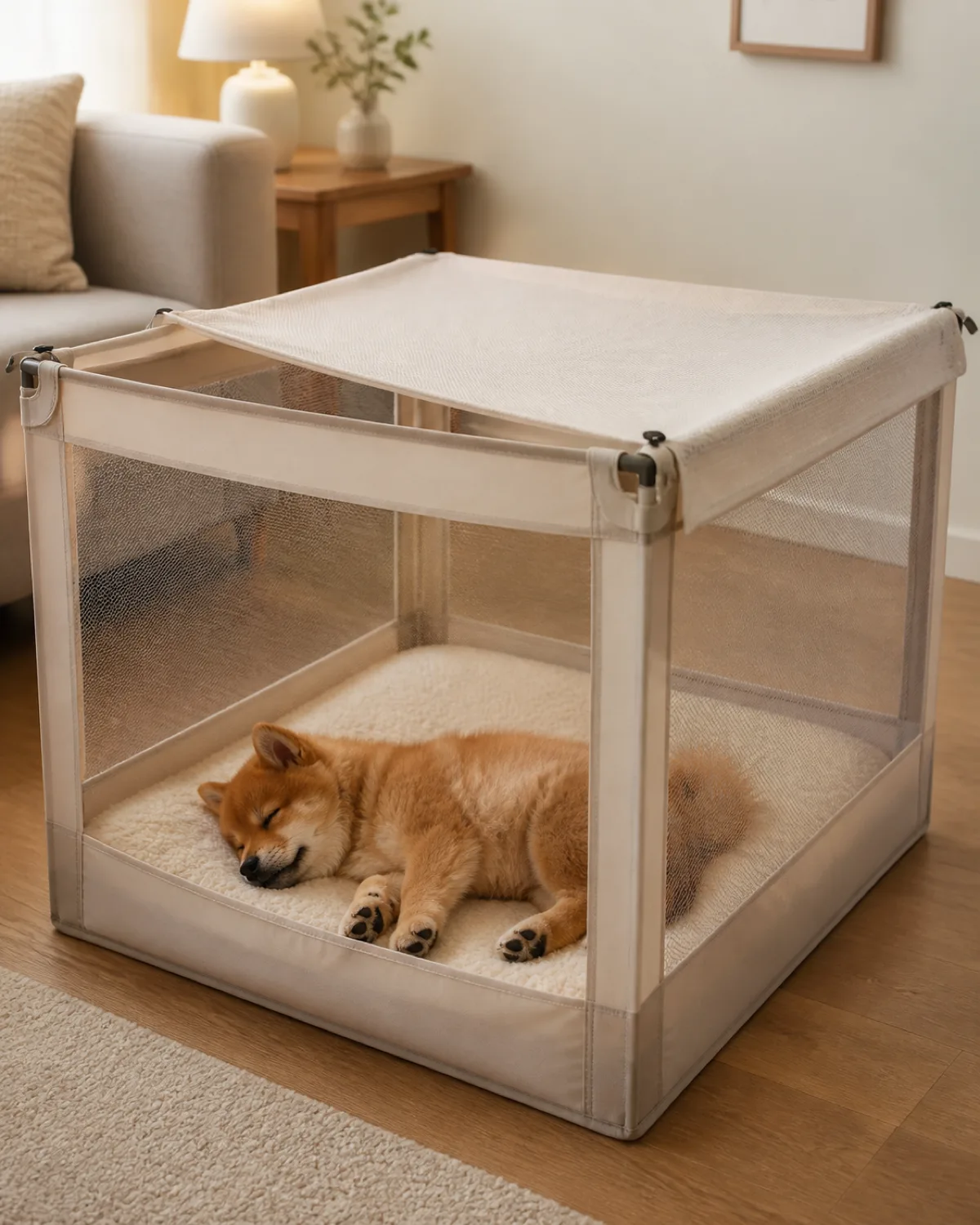
Enforced naps sound harsh until you see the results. A puppy that fights sleep is not a puppy that does not need sleep — it is a puppy that does not know how to turn off yet.
Walk your puppy calmly to the crate or pen. Toss a small treat inside. Close the door. Cover with a blanket if it is not already covered. Leave the room. Do not stand by the crate talking, soothing, or waiting — that is stimulation disguised as comfort.
Ninety percent of puppies settle within five minutes. The remaining ten percent may whine for up to fifteen minutes. If the whining is steady and not escalating, wait it out. Your puppy is learning that the crate is a place where nothing exciting happens, and that nothing exciting is exactly the point.
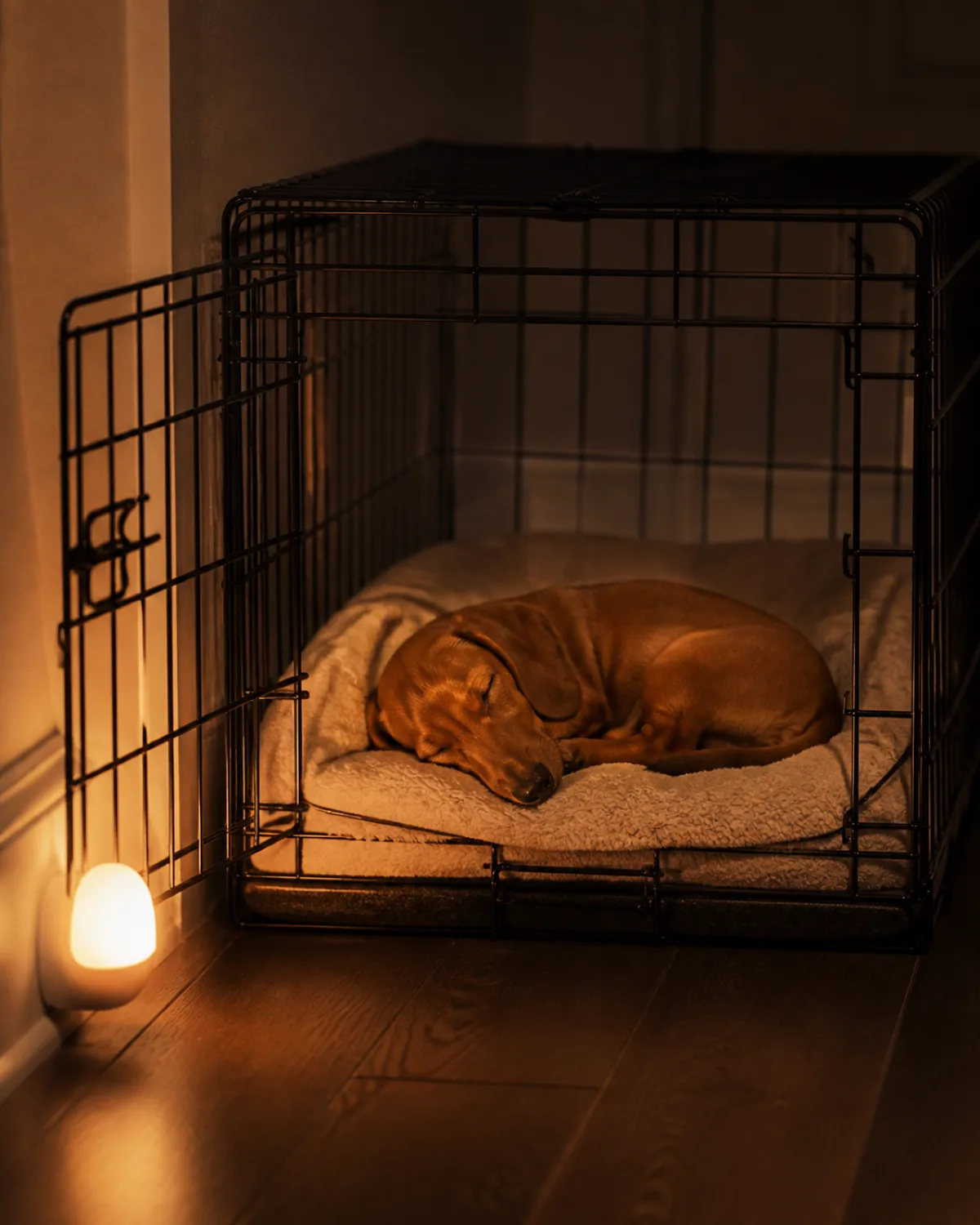
Your eight to twelve week old puppy will wake you up at night. This is not a failure of training — it is a small bladder doing exactly what it should. The goal is not to prevent wake-ups but to make them so boring that your puppy has no reason to look forward to them.
When your puppy whines at two in the morning, move quickly and quietly. Carry it straight outside — do not play, do not talk, do not make eye contact. Stand in one spot and wait. When it goes, a quiet "good" is all you need. Carry it back to the crate. Treat. Close door. Walk away.
The biggest mistake is turning midnight potty breaks into bonding sessions. Every word you say, every belly rub you give, every minute of light you turn on tells your puppy that waking you up leads to good things. You want the opposite message: nighttime is for sleeping, and the only reason we went outside was because your bladder demanded it.
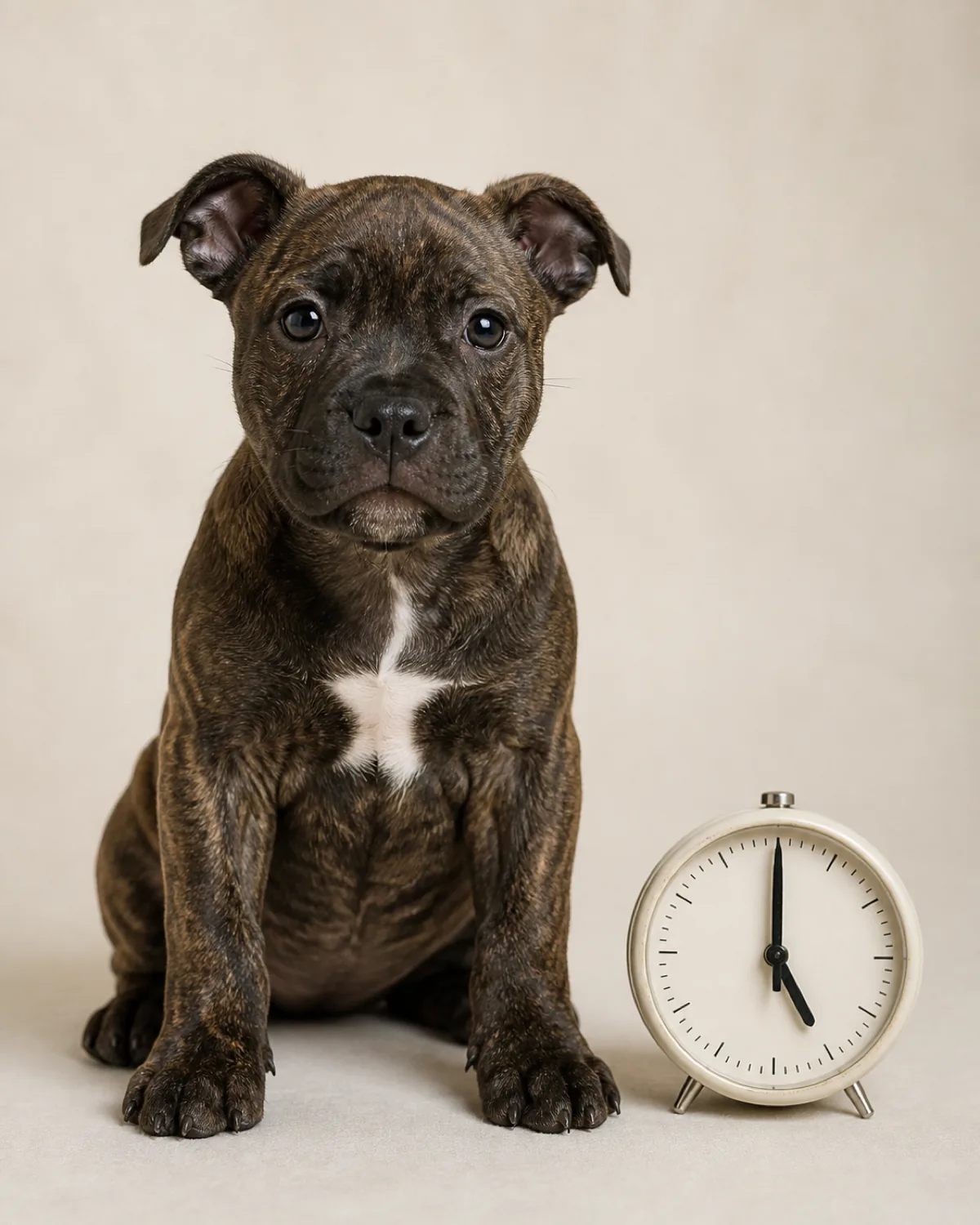
If you set an alarm to preemptively take your puppy out before it wakes crying, you are doing the right thing. The question is when to stop.
Watch for the pattern. When your puppy sleeps through five to seven consecutive nights without waking or crying before your alarm goes off, the bladder has caught up. Drop the alarm and let your puppy signal when it actually needs to go.
Most puppies hit this milestone between four and five months. Large breeds sometimes get there faster because of bigger bladders. Small breeds may take a few extra weeks. Either way, the benchmark is the same: five quiet nights in a row means you can trust the system.
If your puppy backslides after you drop the alarm — one or two accidents inside the crate — bring the alarm back for three to five days and then try again. Regression at this stage is normal and usually caused by a growth spurt or a schedule change.
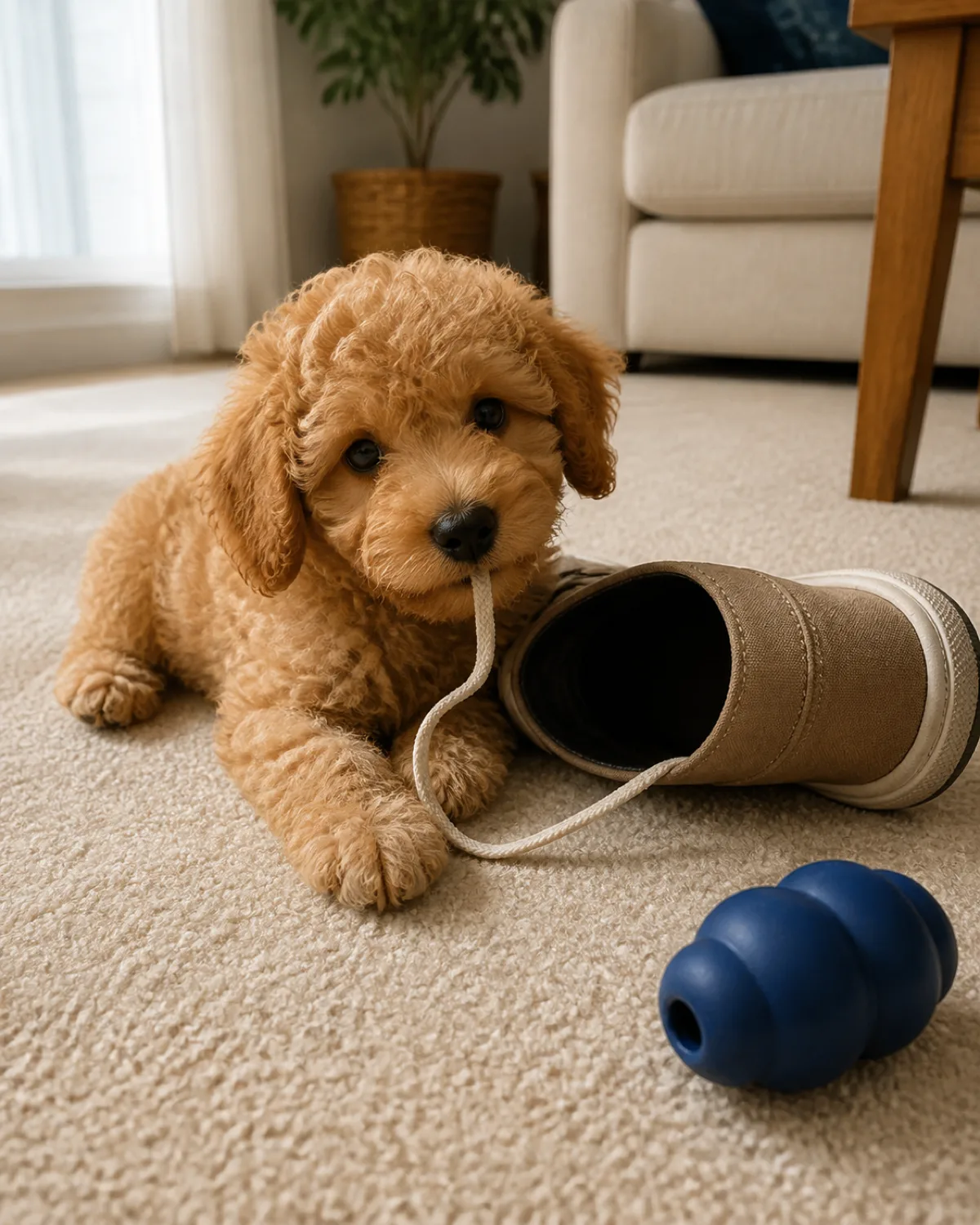
Everything was going well. Your puppy was sleeping through the night. You stopped setting alarms. You told yourself the hard part was over.
Then at four to six months (teething) or eight to ten months (adolescence), your puppy suddenly starts waking at night again, refusing to enter the crate, or whining during previously calm nap times. This is sleep regression, and it is as predictable in puppies as it is in human babies.
The fix is not to change anything. Keep the same bedtime routine. Keep the same crate setup. Keep the same boring midnight protocol. Your puppy's brain is reorganizing, and the familiar structure is the anchor it needs while everything else inside is shifting.
Regression typically lasts one to three weeks. If you ride it out without loosening the rules, you come out the other side with a puppy that sleeps even more soundly than before.
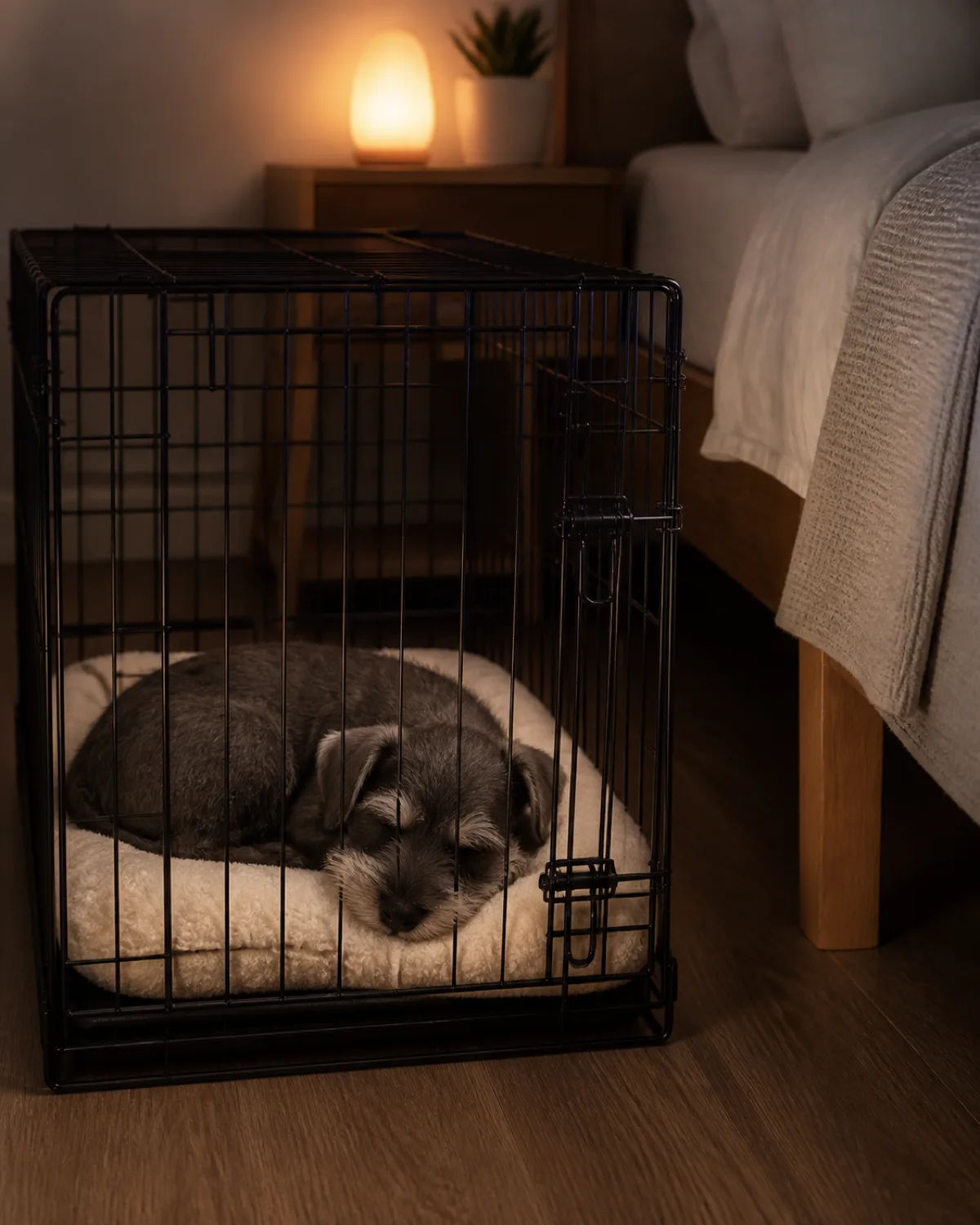
For the first two to four weeks, the crate belongs in your bedroom. Your puppy can hear your breathing, smell you nearby, and knows it is not alone. You can also hear its cries when it needs to go out, which prevents accidents and builds trust.
After the initial adjustment, start moving the crate toward its permanent location. Move it one meter at a time, spending three to five nights at each new position. The gradual shift lets your puppy adjust without the shock of suddenly being in a different room.
The ideal permanent spot is a quiet corner away from direct heat or cold, out of hallway traffic, and away from windows where passing cars or animals might wake a light sleeper. Avoid placing the crate directly under air vents — the noise and temperature fluctuations disrupt sleep more than people realize.
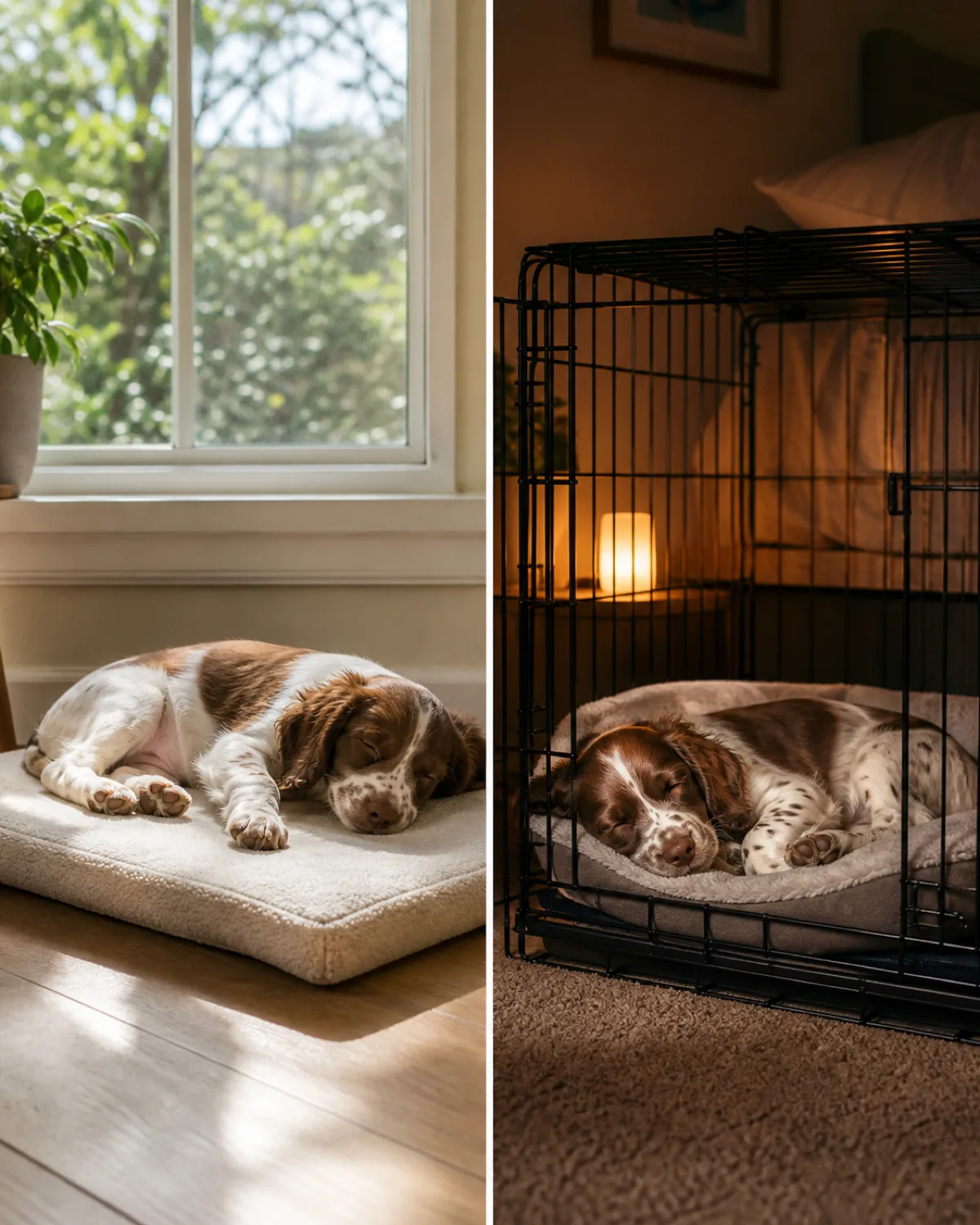
Not every sleep moment needs the full crate-and-darkness treatment. Daytime naps and nighttime sleep serve different purposes and work best in different conditions.
Daytime naps are shorter and lighter. A pen in the living room, a dog bed near your desk, or the crate with the door open all work. Normal household sounds in the background are fine — in fact, they help your puppy learn to sleep through noise, which pays off later.
Nighttime sleep is longer and deeper. The crate with the door closed, blanket cover on, lights out, and no distractions. This is where the real restorative sleep happens, and it needs a controlled environment to reach those deeper stages.
Having two distinct setups teaches your puppy that there are two modes: quick recharge and full shutdown. Over time, your puppy learns to match its sleep depth to the location without any effort from you.
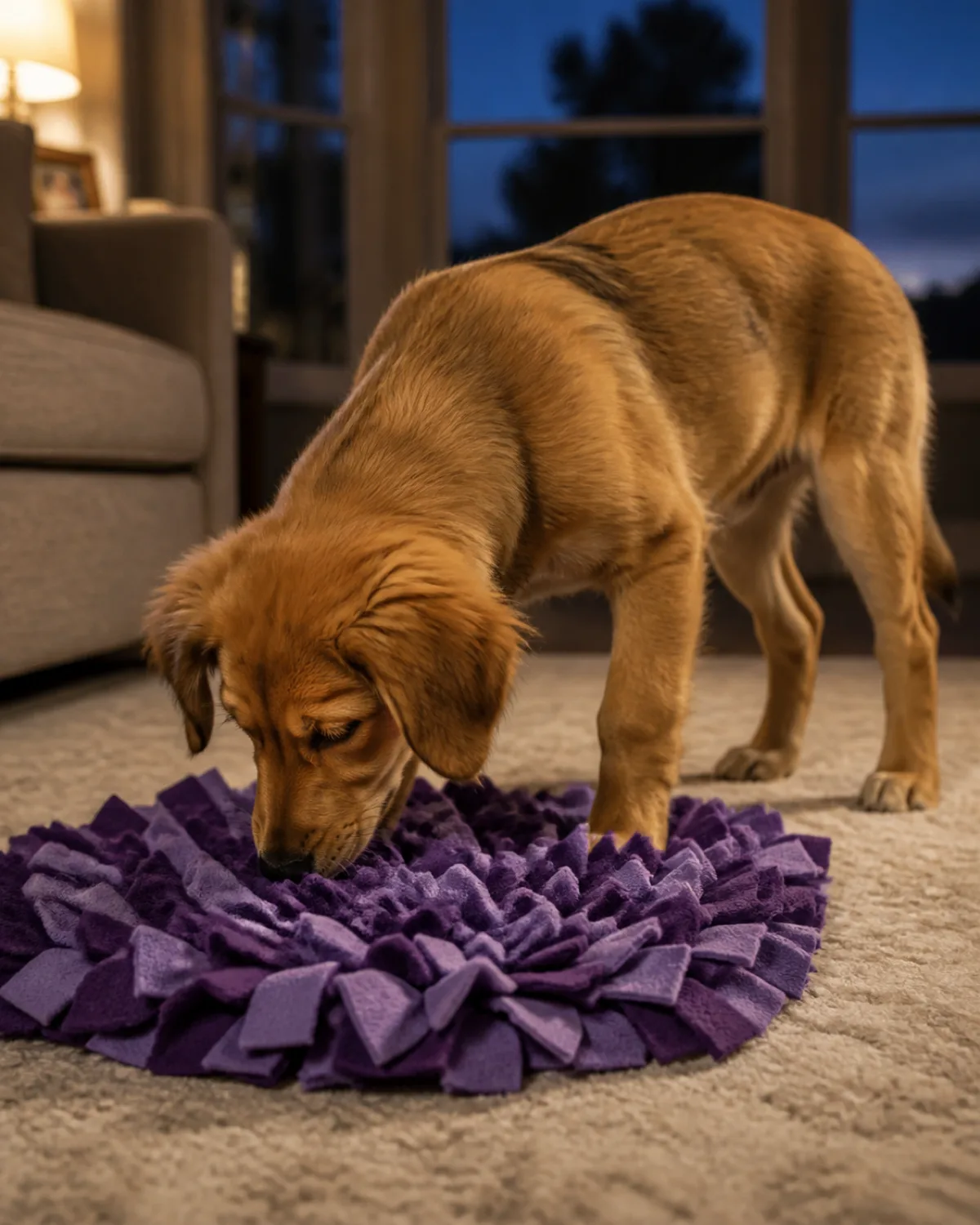
A puppy that goes to bed with unspent energy is a puppy that wakes up too early, whines in the crate, and has trouble settling. The solution is not more exercise right before bed — it is the right exercise at the right time.
Two hours before bedtime, do a session of age-appropriate physical activity. The five minutes per month of age rule is a reasonable guideline: a three-month-old gets fifteen minutes, a six-month-old gets thirty. Walking, fetch in the backyard, or a short play session with another dog all count.
One hour before bed, switch to mental work. Five minutes of basic obedience practice, a snuffle mat with a few treats hidden in the folds, or a frozen KONG. Mental effort tires puppies faster than physical exercise and produces a calmer kind of tired — the kind that leads to sleeping rather than pacing.
Thirty minutes before bed, stop everything. No toys, no training, no roughhousing. Dim the lights if you can. This wind-down window is the bridge between active and asleep, and skipping it is why many puppies fight bedtime. For a complete daily routine framework, see our guide on how to create a daily schedule for your puppy.
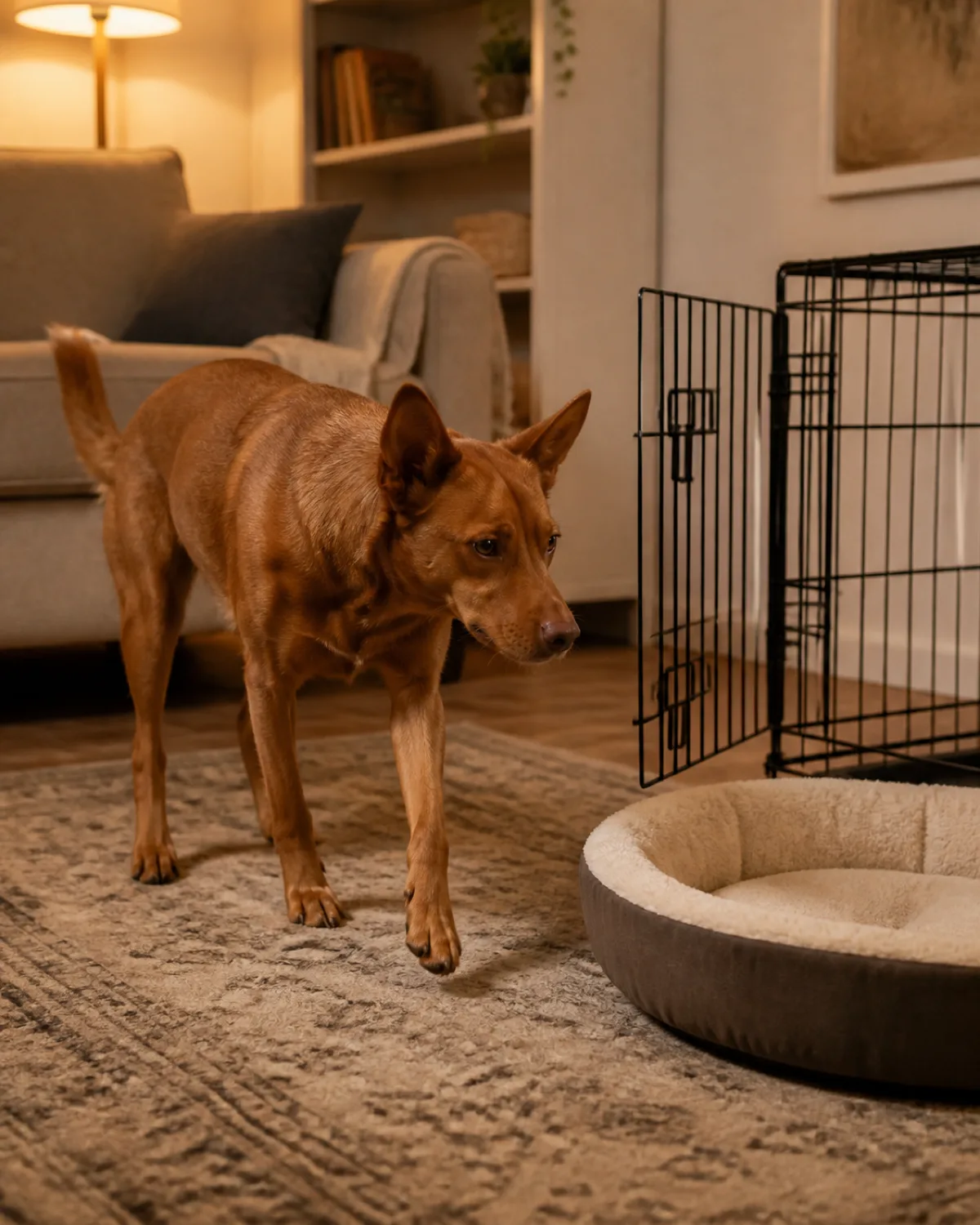
The question every new puppy owner really wants answered is when does this get easy. The honest answer is somewhere between twelve and eighteen months for most breeds, and up to twenty-four months for giants.
You will know your puppy's sleep schedule has matured when three things happen at once: your dog walks to its bed or crate on its own without being guided, it sleeps through the night without any bathroom trips or restlessness, and its daytime naps drop from four or five short ones to one or two longer ones.
At that point, you can start relaxing the structure. Open the crate door permanently. Allow the couch if you want. Let your dog choose where to nap during the day. The habits you built in the first year are now wired in, and your dog knows how to manage its own rest without your intervention.
The effort you put into the first twelve months is not wasted — it is invested. The payoff is a dog that sleeps soundly, settles without drama, and lets you sleep through the night, every night, for the next decade or more.
An eight-week-old puppy typically sleeps eighteen to twenty hours per day, split between overnight sleep and multiple daytime naps. This is completely normal and necessary for growth, brain development, and immune system function.
No. A sleeping puppy is a growing puppy. Interrupting deep sleep slows development and can create an overtired, cranky puppy that is harder to train and more likely to bite. Let your puppy wake up on its own unless a scheduled potty break is overdue.
An overtired puppy loses the ability to self-regulate. The zoomies, hard biting, and frantic behavior you see are signs of exhaustion, not excess energy. Guide the puppy to its crate, cover it, and leave the room. Most puppies crash within five to ten minutes.
Most puppies can sleep through a full eight-hour night by four to five months of age. Small breeds may take slightly longer. A consistent bedtime routine and properly timed last potty break help puppies reach this milestone faster.
During the first few months, a crate provides the safest and most effective sleep environment. Once your puppy reliably settles on its own and sleeps through the night without accidents, you can gradually open the crate door and allow other sleep spots.
Sixteen vet-approved puppy teething relief ideas, from frozen washcloths and chilled carrots to safe chew toys and gum-soothing routines that actually calm a teething puppy.
Read the guideEleven practical ways to stop a dog from chewing furniture, from redirect training and exercise adjustments to bitter sprays and crate management.
Read the guideThirteen safety rules for taking your puppy outside, from the vaccination window and backyard basics to first leash walks, weather timing, and stress signals.
Read the guide